

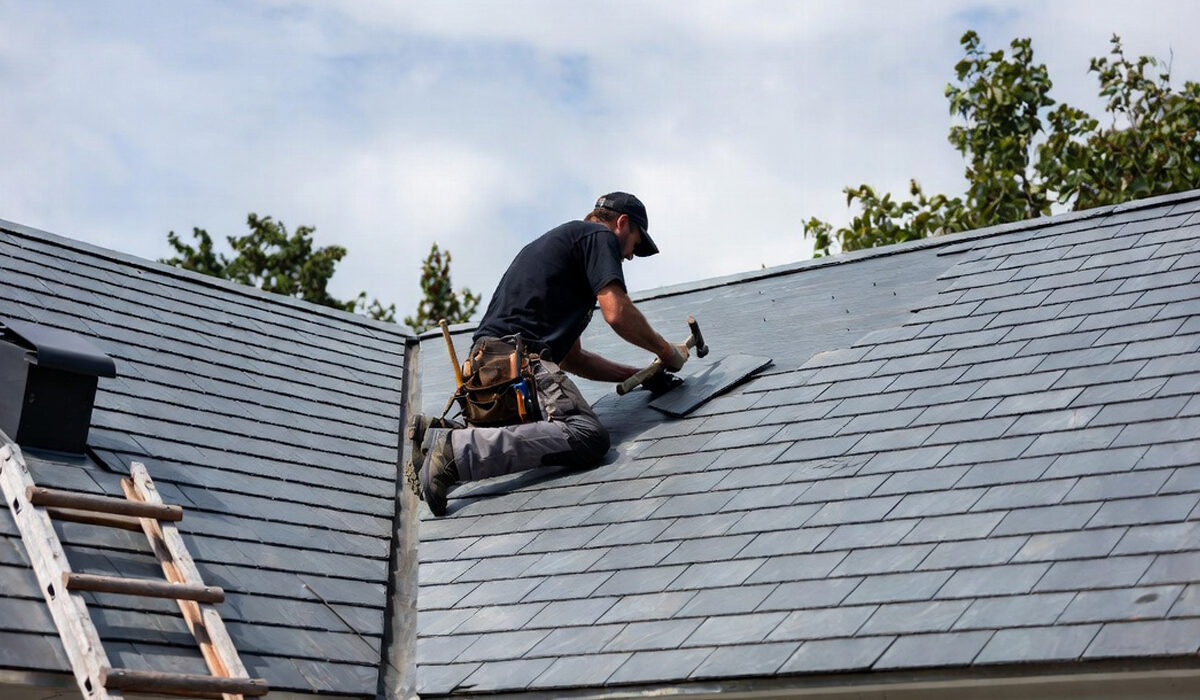
- By Smile Roofing
- Roofing Tips
- 0 Comment
Replacing an asphalt shingle roof becomes a more involved project when one or more roof valleys need to be rebuilt at the same time. The shingles may be the most visible part of the roof, but a valley is a layered drainage assembly that can involve underlayment, flashing, roof decking, and, in more serious cases, supporting framing.
That distinction matters when evaluating the cost to replace an asphalt shingle roof with valley rebuilds. A responsible estimate cannot be based on house square footage alone, and it should not assume that every valley problem requires structural reconstruction. The scope depends on what is actually present, what can be observed before tear-off, and what is discovered once the existing roofing materials are removed.
Complex roof geometry also makes accurate measurement especially important. Detailed satellite roof measurements can help establish roof area, pitch, ridges, hips, edges, and other dimensions that influence material quantities and overall project complexity.
Rather than relying on a generic roof price, homeowners benefit from understanding which parts of the roof are being replaced, which valley components require attention, and which conditions remain unknown until the roofing system is opened.
What Changes When an Asphalt Shingle Roof Replacement Includes Valley Rebuilding
A straightforward asphalt shingle replacement and a replacement involving damaged valleys may look similar from the ground, but the underlying work can be very different.
Roof field installation is relatively repetitive. Crews remove old materials, prepare the roof deck, install the appropriate underlayment and roofing components, and apply new shingles according to the selected system.
Valleys require additional attention because they collect runoff from adjoining roof planes.
Standard Shingle Replacement Covers the Main Roof Surface
A typical replacement scope may involve:
Removing existing roofing materials
Inspecting accessible roof decking
Preparing the substrate
Installing underlayment
Installing starter materials where required
Installing field shingles
Completing ridge, hip, and flashing details
Removing debris and protecting the surrounding property
The exact components depend on the roof design, product requirements, existing conditions, and agreed project scope.
Valley Reconstruction Adds Concentrated Detail Work
A valley may require more than new shingles. Depending on its condition and construction, the work can include:
Removing existing valley shingles
Removing deteriorated flashing
Replacing damaged underlayment
Correcting the drainage path
Replacing sections of roof sheathing
Installing an appropriate valley waterproofing assembly
Reconstructing damaged supporting wood when necessary
Integrating the rebuilt valley with the surrounding new roof
The greater the amount of underlying work, the less useful a simple roof-area estimate becomes.
Why Roof Valleys Affect Asphalt Shingle Replacement Scope
A roof valley forms where two sloped roof sections meet and direct water toward the same drainage path. Because runoff from both surfaces converges in a relatively narrow area, valley construction deserves careful attention during replacement.
This does not mean valleys are inherently defective. Properly designed and installed valleys are normal components of many residential roofs. Their importance comes from the amount of water they are expected to manage.
Concentrated Drainage Makes Valley Details More Important
On an open roof field, water generally travels downward across a broad surface. In a valley, water from two roof planes is directed into the same channel.
That changes the installation requirements around:
Underlayment placement
Flashing integration
Shingle cuts
Fastener positioning
Water-flow clearance
Transitions near walls, dormers, and other roof intersections
Even when the roof deck is sound, careful valley work can require more detail than installing shingles across an uncomplicated roof plane.
Valley Complexity Is Not Reflected by Roof Area Alone
Two roofs can have similar total surface area while requiring very different levels of work.
A simple gable roof may contain few intersections. Another roof of comparable size may include multiple dormers, intersecting wings, attached additions, and several valleys.
The second roof creates more:
Material cuts
Transitions
Valley intersections
Waterproofing details
Flashing work
Waste
Installation complexity
This is one reason responsible roof evaluation begins with actual geometry instead of relying only on the home’s interior square footage.
The Layers That May Be Involved in a Valley Rebuild
The visible shingles are only the uppermost portion of a valley assembly. Understanding the layers below them makes it easier to understand why one valley may need minor corrective work while another requires considerably more reconstruction.
Asphalt Shingles Form the Visible Weather-Shedding Surface
Shingles are intended to shed water down the roof. In valley areas, they must be installed and cut in a manner compatible with the selected valley method and roofing system.
A shingle problem does not automatically mean the roof structure beneath it is damaged.
Underlayment Provides Secondary Protection
Underlayment sits beneath the shingles and contributes to the roof’s secondary water-resistance strategy.
Valleys often receive additional waterproofing attention because of their drainage role. The exact materials and installation method should be compatible with the roofing system, manufacturer requirements, roof configuration, and applicable local requirements.
Flashing Helps Direct Water Through Critical Intersections
Some valley systems incorporate visible or concealed metal flashing. Its job is to help channel water through an area where roof planes intersect.
Flashing may need replacement if it is damaged, improperly integrated, severely deteriorated, or unsuitable for the new roofing assembly.
Roof Decking Creates the Shingle Nailing Surface
Decking, often plywood or oriented strand board in many residential systems, provides the structural surface to which roofing materials are attached.
When moisture has significantly deteriorated a section of decking, new shingles should not simply conceal the problem. The affected material may need to be removed and replaced so the new roof has a dependable substrate.
Structural Framing Sits Below the Roof Deck
The framing system can include rafters, valley rafters, jack rafters, blocking, and other members depending on the home’s construction.
Framing repair is a different level of work from replacing shingles or sheathing. It should not be assumed merely because a valley has leaked.
Valley Flashing Repair, Decking Replacement, and Structural Reconstruction Are Not the Same Thing
The phrase “valley rebuild” can mean different things unless the scope is clearly defined.
That makes written project descriptions especially important.
Flashing Work Addresses Water Management
If the deck and framing remain serviceable, a valley issue may primarily involve the roofing and flashing assembly.
Possible concerns include:
Damaged metal
Poorly integrated transitions
Incompatible previous repairs
Failed sealant used as a substitute for proper detailing
Incorrect shingle termination
Deteriorated underlying materials
The appropriate correction depends on what is actually found.
Decking Replacement Addresses the Roofing Substrate
Deck deterioration may become visible only after shingles and underlayment are removed.
Examples can include:
Soft wood
Delaminated panels
Localized rot
Broken sheathing
Poor previous patches
Open or unsupported panel edges
Replacing affected decking is different from rebuilding the roof framing beneath it.
Structural Reconstruction Addresses Supporting Members
Structural work may be appropriate when supporting wood is damaged, compromised, improperly altered, or otherwise unable to provide the required support.
That determination should come from actual conditions, not assumptions based solely on a roof stain or active leak.
This distinction helps homeowners avoid treating every valley concern as either insignificant or catastrophic.
What Can Be Identified Before the Existing Roof Is Removed
A pre-replacement evaluation can reveal important information, but there are limits to what can be seen without opening the roof.
A professional roof inspection and assessment can help document observable conditions and identify areas that deserve closer attention before the replacement scope is finalized.
Exterior Conditions Can Provide Useful Clues
Visible indicators may include:
Missing or damaged shingles
Previous patching
Exposed flashing
Irregular valley lines
Debris accumulation
Deteriorated roof surfaces
Visible gaps or poorly integrated materials
These clues can guide further evaluation, but they do not always reveal the condition of concealed wood.
Interior Evidence Can Help Narrow the Investigation
Where attic access is available, staining, moisture marks, deteriorated decking, or other visible conditions may help identify an area of concern.
However, water can travel along framing or roofing components before becoming visible indoors. A ceiling stain should not automatically be treated as proof that the leak originated directly above it.
Some Conditions Remain Concealed Until Tear-Off
Roofing materials can hide:
Localized deck deterioration
Old patches
Corroded fasteners
Previous flashing details
Multiple layers of repair material
Moisture effects beneath underlayment
Framing conditions covered by sheathing
This is why transparent proposals distinguish between confirmed work and work that may become necessary after removal begins.
How Roof Geometry Influences the Scope of Valley Reconstruction
Roof size remains important, but geometry explains much of the additional complexity associated with valleys.
Roof Pitch Changes the Actual Surface Area
A home’s living area does not equal its roof area.
Roof pitch increases surface area, while overhangs, garages, porches, additions, and separate roof sections can further change the amount of material needed.
Valley Length Adds Another Measurement Category
The roof field is generally measured by area, but valleys introduce linear dimensions and additional installation details.
A roof with several long valleys can require more specialized work than a similarly sized roof with only one short valley.
Dormers and Intersecting Roof Sections Create More Transitions
Architectural features can increase complexity around:
Valley terminations
Wall intersections
Eaves
Ridges
Changes in slope
Adjacent flashing components
Each transition must work with the surrounding roof rather than function as an isolated detail.
Open, Closed-Cut, and Woven Valleys Require Different Installation Details
Not every asphalt shingle valley is built the same way.
The appropriate method depends on factors such as shingle type, roof geometry, manufacturer installation instructions, existing construction, and the selected roofing system.
Open Valleys Use a Visible Drainage Channel
An open valley generally leaves part of the valley flashing exposed, creating a defined path for runoff.
Installation can involve:
Underlayment preparation
Valley metal placement
Accurate shingle trimming
Appropriate fastening locations
Clear drainage space
Closed-Cut Valleys Cover the Valley Area With Shingles
In a closed-cut configuration, shingles extend through the intersection and are trimmed according to the chosen installation method.
Proper alignment and water flow remain important even though the metal valley surface may not be visible.
Woven Valleys Interlace Shingles Through the Intersection
A woven valley uses overlapping shingle courses from adjoining roof planes.
Not every shingle type or roof configuration is suitable for every valley method. The installation approach should follow the requirements applicable to the roofing system being used.
Hidden Deck Damage Is One of the Most Important Variables in Valley Work
A valley may appear serviceable at the surface while the underlying deck has localized deterioration.
Conversely, an old or unattractive valley does not automatically mean the deck is compromised.
Surface Appearance Cannot Confirm Every Concealed Condition
Roofing materials are designed to cover the substrate. That makes visual inspection valuable but incomplete.
Responsible planning acknowledges this uncertainty rather than claiming that every hidden condition can be identified beforehand.
Defined Procedures Help Manage Concealed Repairs
A clear roofing proposal should explain how additional work will be handled if damaged wood is discovered.
Useful questions include:
How will damaged decking be documented?
How will the homeowner be informed?
What approval is required before additional work proceeds?
How will quantities be recorded?
How will structural concerns be distinguished from ordinary sheathing replacement?
What parts of the valley assembly are already included in the original scope?
These questions create clarity without pretending that concealed damage can always be predicted.
How a Contractor Builds a Reliable Roof Replacement Scope
An estimate for an asphalt shingle roof with valley work should be based on observable conditions, roof measurements, material requirements, and clearly defined assumptions.
Roof Measurement Establishes the Physical Scope
Measurements may account for:
Total roof area
Pitch
Roof facets
Ridges
Hips
Valleys
Eaves
Rakes
Flashing edges
These measurements help organize material requirements and identify areas where additional detail work may be necessary.
Existing Conditions Shape the Removal Scope
The contractor may need to consider:
Number of existing roof layers
Existing shingle condition
Previous repairs
Flashing configuration
Decking condition where visible
Access to different roof sections
Material Selection Defines the New Roofing Assembly
A complete replacement involves more than field shingles.
Depending on the system, components may include:
Asphalt shingles
Underlayment
Starter materials
Ridge or hip caps
Fasteners
Flashing
Valley-specific waterproofing components
Ventilation components when included in the scope
Homeowners considering the broader work involved can review available roofing service options before discussing which services are relevant to the property.
Written Scope Turns Measurements Into a Project-Specific Proposal
Once roof measurements and observable conditions are documented, the next step is to define what will actually be removed, repaired, replaced, and installed.
A free roofing quote can provide a project-specific starting point based on the roof being evaluated rather than a generalized assumption about all asphalt shingle roofs.
Asphalt Shingle Selection and Valley Reconstruction Should Be Evaluated Separately
The shingle chosen for the roof and the condition of the valley are related parts of the same project, but they are not the same cost driver.
Shingle Type Affects the Main Roofing System
Different asphalt shingle products can vary in construction, appearance, profile, warranty terms, and installation requirements.
The roofing product should be selected based on the property, desired appearance, system compatibility, and manufacturer guidance rather than on the assumption that a more expensive shingle will correct an underlying valley problem.
Valley Condition Determines the Repair Depth
A sound deck with deteriorated roofing details may need a relatively limited valley reconstruction.
A deteriorated deck requires additional substrate work.
Compromised framing introduces another category of repair entirely.
Separating these issues helps prevent confusion between an optional roofing-material selection and a necessary repair to the underlying roof assembly.
When a Valley May Need More Than New Shingles
New shingles should not be used merely to conceal a known underlying problem.
Certain conditions may justify a deeper evaluation before the valley is covered by the replacement roof.
Repeated Leakage Can Indicate an Unresolved Detail
A recurring leak near the same valley may suggest that earlier surface repairs did not address the underlying water path.
Possible causes vary, which is why the valley should be evaluated instead of automatically assuming the same repair is appropriate again.
Visible Deformation Deserves Closer Inspection
Sagging, uneven surfaces, or unusual movement may warrant further assessment.
The cause could involve decking, framing, previous construction, or another condition. Visual appearance alone is not enough to determine which component is responsible.
Deteriorated Decking Requires a Sound Replacement Surface
Asphalt shingles depend on a suitable nailing substrate.
If the decking is significantly deteriorated, rebuilding the affected substrate before installing the new roofing system helps establish a more reliable foundation for the replacement.
Rebuilding a Valley During Roof Replacement Can Provide Better Access to Concealed Components
When the surrounding shingles are already being removed, the valley can be evaluated as part of the exposed roof system.
This can be more practical than treating the visible shingle surface as the only part of the problem.
Tear-Off Exposes the Valley Assembly
Removal can reveal:
Underlayment condition
Flashing configuration
Deck seams
Previous repairs
Localized wood damage
Fastener patterns
Transitions between roof sections
This information allows the repair scope to respond to the actual condition found.
New Valley Components Must Integrate With the Surrounding Roof
A valley rebuild should not be viewed as an isolated strip of material.
Its underlayment, flashing, shingles, and substrate must function together with the adjoining roof planes.
Homeowners who want to see examples of completed residential roofing work can review recent roof replacement projects while evaluating the type of workmanship and finished roof appearance they expect from their own project.
How to Compare Roof Replacement Proposals That Include Valley Work
A proposal becomes more useful when it explains what the contractor intends to do rather than relying on broad phrases such as “repair valley as needed.”
Confirm the Valley Scope in Writing
The proposal should make it reasonably clear whether the planned work includes:
| Scope Item | What to Clarify |
|---|---|
| Existing roofing removal | Which valley materials will be removed |
| Underlayment | What type of valley protection is included |
| Flashing | Whether existing flashing remains or is replaced |
| Decking | How damaged sheathing will be handled |
| Structural wood | How deeper deterioration will be addressed if found |
| Shingle installation | Which valley method will be used where applicable |
| Debris handling | Whether removed roofing and wood are included in cleanup |
| Scope changes | How additional work will be documented and authorized |
Compare Material Descriptions, Not Just the Final Total
Two proposals may describe different systems even when both use the phrase “asphalt shingle replacement.”
Look for clear descriptions of:
Shingle product
Underlayment
Flashing
Valley method
Decking repair procedure
Ventilation work where applicable
Workmanship coverage
Manufacturer documentation
Watch for Vague Structural Language
A proposal should not imply extensive structural reconstruction without identifying why it is needed.
Likewise, a contractor should not dismiss visible structural concerns without proper evaluation.
Clear documentation is preferable to either extreme.
Repairing One Valley Versus Replacing the Surrounding Roof
Not every valley problem requires a complete roof replacement. At the same time, not every valley can be effectively rebuilt without considering the surrounding roofing.
The Condition of Adjacent Shingles Matters
Localized work may be more practical when the surrounding shingles remain serviceable and can be integrated with the repaired area.
If nearby shingles are brittle, extensively deteriorated, or difficult to work with without causing additional damage, the practical scope can change.
Existing Roofing Layers Can Complicate Localized Repairs
Multiple layers, old underlayment, previous patches, or unusual flashing details can make it difficult to isolate the valley from the rest of the roofing system.
Matching Existing Materials May Be Difficult
Older shingles may no longer match currently available products in color, profile, or manufacturing line.
That does not automatically require full replacement, but it is a practical consideration when appearance and integration matter.
Roof Access and Architecture Can Affect Valley-Rebuild Complexity
Physical access to the roof can influence how work is staged and performed.
Steeper Slopes Require Different Working Conditions
Steep roof sections can affect:
Crew positioning
Material handling
Fall-protection setup
Access around intersections
Installation pace
These factors should be evaluated on the actual property rather than converted into a universal assumption.
Multi-Level Roofs Create Additional Staging Considerations
Homes with multiple roof heights, additions, dormers, and attached structures can require more careful movement of materials and debris.
Limited Ground Access Can Influence Jobsite Logistics
Narrow side yards, landscaping, fences, adjacent structures, and limited staging areas may affect how materials are delivered and removed.
The roof itself is only part of the project environment.
Southern California Roof Characteristics Can Create Different Valley Conditions
Residential roofing across Southern California includes a wide variety of architectural styles, roof pitches, additions, and remodel histories.
That variety makes property-specific evaluation particularly important.
Additions Can Introduce New Roof Intersections
A later addition may connect to an older roof plane through a new valley.
The quality of that transition depends on how the addition was framed, flashed, and integrated with the existing roof.
Long-Term Sun Exposure Can Affect Aging Roofing Materials
Asphalt shingles exposed to years of heat and sunlight can gradually show signs of aging.
Condition should still be evaluated directly. Climate exposure alone does not determine whether a roof or valley requires replacement.
Local Properties Can Have Very Different Access Conditions
Single-story homes on open lots and multi-level homes on constrained properties may require different staging approaches even when the roofing material is similar.
Property owners evaluating nearby options can review Smile Roofing’s roof repair and replacement services to understand the types of residential roofing work available for local properties.
Common Questions About Asphalt Shingle Roof Replacement With Valley Rebuilds
Is Valley Work Automatically Included in a New Roof?
Not necessarily.
A roof replacement proposal should define what is included. Some projects may involve ordinary valley installation as part of the new roof system, while others require additional decking or structural work because of existing damage.
The contract or proposal should make that distinction clear.
Does a Leaking Valley Mean the Framing Is Damaged?
No.
A valley can leak because of shingles, flashing, underlayment, transitions, previous repairs, or other roofing details without structural framing damage.
Structural concerns should be based on actual observed conditions.
Can All Wood Damage Be Identified Before Tear-Off?
Not always.
Some deterioration may be visible from the attic or roof surface, but other damage can remain concealed beneath shingles and underlayment.
A transparent repair process should account for that limitation.
Can Only the Damaged Valley Be Rebuilt?
Sometimes, but feasibility depends on the surrounding roof.
The existing shingle condition, underlayment, flashing, roof age, prior repairs, and ability to integrate new materials all influence whether localized work is practical.
Should Roof Estimates Be Compared Only by Square Footage?
No.
Roof area is important, but valleys, pitch, access, roof intersections, flashing conditions, removal requirements, and hidden repairs can materially change the scope.
Homeowners with broader process questions can also consult the company’s roofing questions and answers when preparing for an inspection, estimate, or replacement discussion.
Building a Clear Scope for Asphalt Shingle Replacement and Valley Reconstruction
The most dependable approach to an asphalt shingle roof replacement with valley rebuilds is to separate what is known from what remains concealed.
Measured roof geometry establishes the size and complexity of the roofing system. Inspection identifies visible defects and areas requiring attention. Tear-off can reveal conditions that could not reasonably be confirmed beforehand.
A clear proposal should then distinguish among:
Standard asphalt shingle replacement
Valley waterproofing and flashing work
Decking replacement
Structural repair when genuinely required
Optional material upgrades
Work triggered by concealed conditions
That structure gives homeowners a clearer understanding of what is being replaced and why.
The goal is not to assume the most extensive repair or to minimize legitimate problems. It is to build the replacement scope around the roof that is actually present, with valley work treated as an integrated part of the complete roofing system rather than as a cosmetic patch on top of unresolved conditions.