

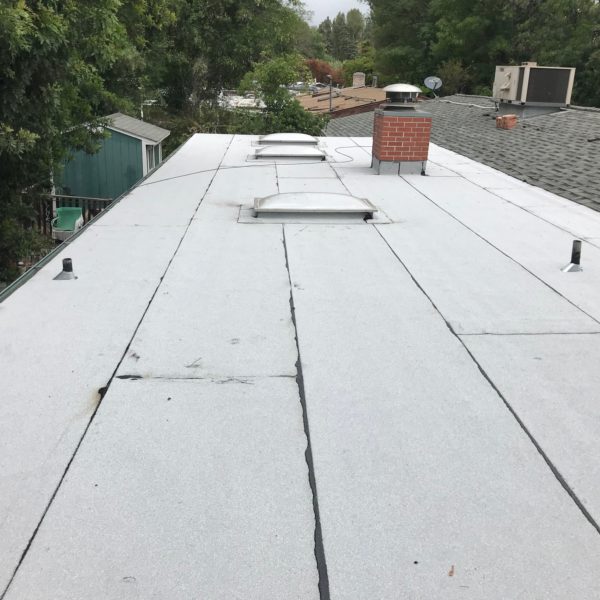
- By Smile Roofing
- Roofing Tips
- 0 Comment
Flat roof leak repair is rarely as simple as covering the spot where water appears indoors. A ceiling stain, bubbling paint, or damp wall usually shows where water finally escaped, not where it entered the roof. On a low-slope or flat roof, moisture can move sideways beneath the membrane, follow insulation seams, travel along framing, or collect around penetrations before it becomes visible inside the home.
That is why missed failure points cause so many repeat leaks. A patch over the most obvious crack may stop water briefly, but the same roof can leak again if ponding water, failing seams, loose flashing, clogged drains, or aging rooftop penetrations remain unresolved. A dependable repair begins with the roof system as a whole, not a single visible defect.
Homeowners can reduce guesswork by understanding where flat roofs usually fail, what symptoms deserve attention, and why certain repairs require more than surface sealant. When roof layout, square footage, perimeter conditions, and drainage zones need to be reviewed before planning repair work, roof measurements from satellite imagery can help provide useful roof information without relying only on rough visual estimates.
Why Flat Roof Leaks Travel Before They Show Indoors
Flat roofs are designed differently from steep-slope roofs. Instead of shedding water quickly by gravity, they depend on subtle slope, drains, scuppers, gutters, seams, flashing, and membrane continuity. When one of those details weakens, water may enter at one location and appear somewhere entirely different.
The Ceiling Stain Is Usually Not the Leak Source
A brown ceiling mark below a flat roof often misleads homeowners. Water can enter near a parapet wall, drain, or HVAC curb, then move beneath the roof membrane until it finds a gap in decking, a fastener path, or a drywall opening.
This hidden travel path makes flat roof leak repair more diagnostic than decorative. The visible stain is only evidence that water has found a route into the living space. The repair target is the entry point on the roof, plus any saturated material that allowed the leak to spread.
Water Follows Low Spots, Seams, and Structural Paths
Water is persistent. On a flat roof, it follows the easiest path available. That may include:
A lifted membrane seam
A cracked coating line
A poorly sealed pipe penetration
A drain bowl with separated flashing
A parapet wall with failing counterflashing
A soft area where insulation has compressed
A roof edge where metal flashing has shifted
The actual opening may be small, but flat roofs often give water time to exploit it. Unlike a steep roof, where water usually moves down and away quickly, a low-slope roof can hold water long enough for small weaknesses to become active leak points.
Trapped Moisture Changes the Repair Scope
A surface patch may not solve the problem if moisture is already trapped below the roof membrane. Wet insulation loses performance, soft decking can weaken, and repeated dampness can cause interior odors or staining. In some cases, the roof surface may appear mostly intact while the substrate beneath it has already absorbed water.
That is why a proper repair assessment may involve checking for soft spots, blistering, loose seams, and repeated staining patterns. A repair that ignores trapped moisture can hide the symptoms while allowing the underlying issue to continue.
Ponding Water and the Drainage Problems Homeowners Often Accept as Normal
Ponding water is one of the most important warning signs on a flat roof. Many homeowners assume standing water is expected because the roof is “flat,” but a well-functioning low-slope roof should still move water toward drains, scuppers, or edges.
Why Recurring Standing Water Deserves Attention
Temporary water after rain is not always a defect, but recurring puddles in the same areas can reveal a drainage problem. Ponding may form because of clogged drains, blocked scuppers, sagging decking, compressed insulation, debris buildup, or roof slope that no longer directs water properly.
Once water repeatedly sits in the same area, it adds stress to the membrane and nearby seams. It can also collect dirt, leaves, and sediment that hold moisture against the roof surface. Over time, these conditions make cracks, blisters, coating wear, and seam separation more likely.
When standing water keeps returning near drains, roof edges, seams, or rooftop equipment, a no-cost roof inspection can help determine whether the concern is limited to debris and maintenance or connected to a larger roof detail problem.
How Ponding Accelerates Membrane Wear
Flat roof materials are built to withstand weather exposure, but long-term standing water can shorten performance. Ponding areas often experience:
More surface contamination
Faster coating breakdown
Increased algae or organic growth
Extra stress during heat expansion
Greater freeze and contraction stress in colder conditions
Weakening around seams and laps
More frequent debris buildup around drains
The most concerning ponding zones are those located near seams, penetrations, parapet walls, or previous patch areas. Water sitting near an already vulnerable detail increases the chance of repeated leaks.
Drainage Repairs Depend on the Cause
Not every drainage issue requires the same fix. Some flat roof leaks tied to ponding can improve with drain clearing, scupper cleaning, debris removal, or better maintenance. Others may involve drain bowl repair, membrane replacement around drainage points, tapered insulation, or correction of damaged low areas.
A safe repair recommendation depends on what is causing water to remain in place. Guessing with sealant alone does not correct the drainage condition that caused the leak risk.
Seams, Laps, and Membrane Edges Are Quiet Leak Sources
The middle of a flat roof membrane may look sound while the vulnerable details around it are beginning to fail. Seams, laps, transitions, and membrane edges are common leak sources because they rely on bonds, welds, adhesives, tapes, or layered materials to remain watertight.
Why Seams Fail Before the Open Roof Field
Seams experience constant movement. Heat causes roof materials to expand. Cooler temperatures cause contraction. Foot traffic, installation quality, dirt contamination, adhesive aging, and standing water can all weaken seam integrity.
On some systems, seams are heat-welded. On others, they depend on adhesives, tapes, asphaltic materials, or layered reinforcement. Each system has its own repair method. Applying the wrong patch material can create a temporary covering without forming a proper bond.
Small Seam Clues That Often Get Missed
Homeowners may overlook early seam failure because the signs are subtle. Warning clues include lifted edges, dirt lines following the seam, wrinkles, fishmouth openings, cracked lap areas, bubbles near seams, or small gaps where water can enter during rain.
These signs matter because seam defects can pull water under a large section of roofing. The leak may appear indoors far away from the seam itself.
Flat Roof Materials Require Compatible Repair Methods
| Flat Roof System | Common Failure Point | Homeowner Clue | Repair Consideration |
|---|---|---|---|
| TPO | Welded seams and flashing transitions | Loose edges, dirt lines, lifting near laps | Compatible cleaning, probing, welding, or patching |
| PVC | Welded seams and curb details | Split transitions or open edges | Proper surface prep and compatible membrane repair |
| EPDM | Adhesive seams and shrinkage points | Curling, pulled edges, loose tape | Primer, seam tape, and compatible rubber patching |
| Modified Bitumen | Cracks, laps, and granule wear | Splits, exposed asphalt, worn traffic areas | Reinforced repair using suitable materials |
| Built-Up Roofing | Blisters, gravel voids, and exposed felt | Soft areas, bare spots, cracking | Cut, dry, patch, reinforce, or resurface as appropriate |
| Coated Roof | Thin coating and adhesion loss | Flaking, chalking, ponding stains | Repair damaged areas before compatible coating work |
A repair should match the existing roof system. Asphalt cement, silicone, acrylic coating, EPDM tape, and thermoplastic patches are not interchangeable. A material that seems watertight at first may fail if it cannot bond correctly to the existing surface.
Parapet Walls, Coping Caps, and Roof Edges Where Leaks Hide
Flat roofs often meet walls, raised edges, parapets, or metal perimeter details. These areas are frequent failure points because they combine roofing, wall materials, metal, sealant, and movement.
Parapet Walls Can Let Water Enter from the Side
A leak that looks like a roof membrane failure may actually begin at a parapet wall. Water can enter through cracked stucco, open coping cap joints, loose counterflashing, failing sealant, or a membrane termination that has pulled away from the wall.
This type of leak can be confusing because the roof surface may look dry and intact. Water may be entering vertically through the wall assembly, then moving behind the roofing or into the ceiling line.
Coping Caps and Edge Metal Need More Than a Ground-Level Look
Coping caps protect the top of parapet walls. When joints open, fasteners loosen, metal shifts, or sealant cracks, water can enter behind the wall. From the ground, the defect may look minor or may not be visible at all.
Roof edge metal can create similar problems. If edge flashing lifts, separates at corners, or loses its bond to the membrane, wind-driven rain can enter beneath the roof edge. Once water gets behind the edge detail, it may travel under the membrane before dripping indoors.
Flashing Repairs Must Address the Whole Transition
Flashing repair is not just caulking a crack. The surrounding roof, wall, termination, fasteners, and membrane bond must be considered together. If the flashing detail failed because the membrane is shrinking, the deck is soft, or water is ponding against the wall, sealing the visible opening may not be enough.
Flat roof leak repair often requires coordinated work across membrane areas, flashing transitions, drainage points, and structural details. That is why homeowners benefit from understanding the range of residential and commercial roofing services available when a leak involves more than one roof component.
Drains, Scuppers, and Gutters Behind Repeat Flat Roof Leaks
Drainage details are easy to ignore until water enters the home. Yet drains, scuppers, and gutters are among the most important parts of flat roof performance. When drainage fails, even a roof with a mostly intact membrane can become vulnerable.
Clogged Drains Can Overload Vulnerable Roof Areas
Flat roof drains collect leaves, branches, dirt, roofing granules, and windblown debris. A clogged drain can hold water around the drain bowl, increasing pressure on the surrounding membrane and flashing. If the drain seal, clamping ring, or nearby membrane has weakened, water can enter at the exact location where drainage should be protecting the roof.
Drain areas deserve careful inspection because they combine water concentration, material transitions, and mechanical parts. A small separation around a drain can become a repeat leak during heavy rain.
Scuppers and Overflow Points Reveal Drainage Stress
Scuppers allow water to exit through wall openings or perimeter details. When scuppers are blocked, undersized, poorly flashed, or surrounded by failing sealant, water can back up against parapet walls. Staining below a scupper, rust around metal boxes, or loose flashing near the opening may indicate drainage stress.
A scupper problem can also send water into a wall instead of away from the building. That kind of leak may show indoors near wall edges, windows, ceiling corners, or exterior-facing rooms.
Maintenance Habits That Reduce Drainage-Related Leaks
Homeowners can reduce some drainage-related risks with practical roof care:
Clear leaves and branches after wind events.
Check drain strainers before wet weather.
Look for sediment rings that show recurring ponding depth.
Keep rooftop storage, planters, and loose items away from drainage paths.
Watch for staining below scuppers or overflow outlets.
Avoid walking on soft or visibly damaged roof areas.
Photograph recurring puddles so patterns can be compared during inspection.
Routine observation does not replace professional repair, but it helps homeowners notice problems before a small leak becomes harder to trace.
HVAC Curbs, Skylights, Pipes, and Pitch Pockets Age Faster Than the Roof Field
Every roof penetration interrupts the membrane. Pipes, vents, skylights, HVAC curbs, conduit supports, and equipment platforms all require special detailing to remain watertight. These details often age faster than the broad roof surface because they involve corners, vertical surfaces, fasteners, sealants, and movement.
HVAC Curbs Hide Leaks Beneath Equipment
Rooftop HVAC units can make leak diagnosis more difficult. Water may enter at a curb, loose flashing, open seam, rusted equipment support, or ponding area beside the unit. Vibration from equipment can also stress older sealant and flashing joints.
Because HVAC areas are often crowded, homeowners may not see the defect clearly. A leak near an interior vent or ceiling register may not mean the HVAC unit itself is leaking. It may mean the roof curb or nearby membrane needs attention.
Pipes, Vents, and Pitch Pockets Require Close Inspection
Pipe penetrations often rely on boots, collars, flashing, or sealant. Over time, these materials can crack, shrink, separate, or harden under sun exposure. Pitch pockets, which are used around some irregular penetrations, can dry out or pull away from the penetration they are meant to seal.
A small gap around a pipe can allow water to enter repeatedly, especially if ponding water or debris collects nearby. These leaks are often missed because the roof field looks sound.
Skylight Leaks Are Not Always Roof Leaks
Skylight-related water entry may come from the roof membrane, the curb flashing, the skylight frame, cracked glazing, condensation, or deteriorated seals. Effective repair depends on identifying which part of the assembly has failed.
If homeowners are comparing roof conditions or trying to understand how different repairs may look, reviewing examples of finished roofing work can provide a practical sense of the types of roof projects a contractor has completed without assuming every leak requires the same repair approach.
Blisters, Bubbles, Soft Spots, and Hidden Moisture Below the Surface
Flat roof damage is not always a clean crack or open seam. Sometimes the roof surface develops blisters, bubbles, wrinkles, or soft areas that suggest air, moisture, adhesion failure, or substrate problems beneath the visible membrane.
What Roof Blisters Can Reveal
A blister forms when air or moisture becomes trapped between layers. Some blisters remain stable, while others split, grow, or collect water. A blister near a seam, drain, or previous patch deserves special attention because it may indicate that water has already entered the roof assembly.
Not every blister means active leaking, but ignoring blisters can be risky if they are expanding, soft, cracked, or located in ponding areas.
Soft Spots Change the Repair Conversation
A soft spot can indicate wet insulation, deteriorated decking, crushed substrate, or long-term moisture exposure. Walking over soft areas can make damage worse and may be unsafe depending on the condition of the deck.
Patching over a soft area rarely solves the underlying problem. The surface material may stick briefly, but if the substrate below is unstable or wet, the repair may fail again.
Coating Over Wet Roofing Can Lock in the Problem
Roof coatings can be useful when applied to the right roof under the right conditions, but coating over wet, dirty, loose, or unstable roofing can create a false sense of repair. Moisture trapped beneath a coating can continue to move, blister, or weaken adhesion.
Before a coating is considered, damaged seams, open flashing, wet areas, and unstable patches should be addressed. Coating is not a substitute for diagnosing the leak source.
Interior Leak Clues That Help Narrow the Failure Point
Interior symptoms can provide useful clues when they are documented carefully. The goal is not for homeowners to diagnose the entire roof from inside the home, but to capture patterns that help connect weather conditions to roof behavior.
Ceiling Stains, Bubbling Paint, and Drywall Changes
A fresh water stain may appear darker after rain and fade as it dries. Bubbling paint can suggest moisture trapped behind the surface. Sagging drywall may indicate heavier saturation and should be treated cautiously.
The location of a stain matters, but the timing matters too. A leak that appears during rain may have a different cause than one that appears hours later after ponding water slowly finds an opening.
Musty Odors Can Signal Hidden Moisture
A musty smell after rain can suggest moisture above the ceiling or inside wall cavities. Even if no active drip is visible, odor changes deserve attention when they repeat after storms.
Interior humidity, staining near exterior walls, and damp insulation can all point to water entry that is not yet dramatic enough to create a visible drip.
Wind-Driven Rain Can Expose Side-Entry Leaks
Some flat roof leaks appear only during wind-driven rain. That pattern may point toward parapet walls, roof edges, wall flashing, skylight curbs, vents, or vertical transitions rather than the center of the roof field.
Questions about leak symptoms, inspections, materials, and repair expectations can often be clarified through answers to common roofing questions before a homeowner decides what information to gather for a roofing visit.
Why DIY Flat Roof Leak Repair Often Fails After the Next Storm
DIY flat roof repair usually fails for one of three reasons: the wrong leak source was patched, the wrong material was used, or the roof surface was not prepared correctly. A product may look waterproof in the container, but that does not mean it is compatible with the existing roof.
The Wrong Patch Material Can Create New Problems
Flat roof systems are material-specific. EPDM rubber, TPO, PVC, modified bitumen, built-up roofing, and coated roofs do not all accept the same sealants or patches. Some products will not adhere properly. Others may crack, shrink, soften, or separate from the roof surface.
A poorly matched patch can hide the leak point temporarily while trapping water underneath. It can also make later professional repair more difficult because old material must be removed before a suitable repair can be installed.
Surface Preparation Determines Whether a Repair Bonds
Even compatible repair materials can fail if the roof surface is dirty, wet, oily, chalky, loose, or unstable. Proper preparation may involve cleaning, drying, removing failed material, priming, probing seams, and checking whether the surrounding roof can hold a repair.
Skipping preparation is one of the most common reasons a flat roof patch peels, bubbles, or leaks again.
Emergency Patching Is Not the Same as Permanent Repair
There are situations where a temporary measure may help reduce active water entry, especially when interior damage is occurring. Temporary patching should be treated as a short-term protective step, not a complete leak solution.
Permanent repair requires identifying the failure point, confirming material compatibility, checking nearby vulnerable details, and making sure the roof surface can support the repair.
What a Proper Flat Roof Leak Repair Assessment Should Include
A good leak assessment is systematic. It does not begin and end with the most visible crack. The roof field, seams, drainage details, flashings, penetrations, edges, and interior symptoms all matter.
Roof Field and Membrane Condition Review
The broad roof surface should be checked for punctures, cracks, coating wear, exposed reinforcement, surface contamination, traffic damage, old patches, and signs of movement. Previous repairs deserve close attention because repeated patching in one area often suggests the original leak source was never fully resolved.
Seam Probing and Transition Inspection
Seams, laps, corners, curb transitions, wall terminations, and edges need careful review. A seam may look closed from a distance but lift when gently checked. A corner may hold water. A termination bar may have loose fasteners or failing sealant.
This part of the assessment helps separate surface wear from actual water-entry risk.
Drainage Pattern Review
Drainage patterns reveal how water behaves on the roof. Sediment rings, algae stains, debris lines, and recurring puddles can show where water collects. Drain bowls, scuppers, gutters, and overflow areas should be checked together because a drainage issue in one location can create leaks somewhere else.
Clear Repair Scope Without Overpromising
Before authorizing repair work, homeowners should understand what area is being repaired, what material will be used, whether flashing or drainage details are included, and whether any hidden moisture concerns were observed. A free roofing estimate can support a clearer conversation around the proposed scope, roof condition, and repair approach without relying on vague assumptions.
A responsible repair plan should avoid unrealistic promises. Some leaks are straightforward once the failure point is found. Others require deeper investigation because water has traveled, materials are layered, or multiple roof details are aging at the same time.
Southern California Flat Roof Conditions That Influence Leak Repair
Flat roof leak repair is shaped by local climate, roof style, and building age. In Southern California, sun exposure, thermal movement, dry conditions, sudden rain, and parapet-heavy architecture can all affect how roofs age and where leaks develop.
Sun Exposure Breaks Down Sealants, Coatings, and Membranes
Strong sun can dry out sealants, age coatings, and increase expansion and contraction in roof materials. A detail that remains sealed in mild conditions may begin opening after repeated heat stress. Corners, seams, pipe boots, and roof edges are especially vulnerable because they experience movement and direct exposure.
UV wear can also make older coatings chalky or brittle. Once surface protection weakens, the roof becomes more vulnerable around low areas and transitions.
Older Low-Slope Roofs Can Hide Layered Problems
Some flat roofs have multiple repair layers, older patches, changed drainage paths, abandoned penetrations, or additions that tie into the original roof. These conditions can make leak tracing more complex.
A stain may relate to an old roof edge, a previous overlay, or a transition between two roof sections. Effective flat roof leak repair depends on recognizing these building-specific details rather than treating every leak as a surface crack.
Local Roofing Experience Supports Better Diagnosis
A contractor familiar with regional roof styles, sun exposure, access conditions, parapet details, and common low-slope systems can evaluate flat roof leaks with more practical context. Homeowners looking for help with repair, replacement, or broader roof concerns can work with a local contractor for roof repair and replacement when the roof condition requires experienced evaluation rather than guesswork.
From Missed Failure Points to Flat Roof Repairs That Hold
Flat roof leak repair works best when the real failure point is found and corrected. The visible stain matters, but it is only part of the story. Ponding water, open seams, aging flashing, clogged drains, loose coping caps, cracked pipe boots, soft decking, and incompatible old patches can all contribute to repeat leaks.
A flat roof is a connected system. Drainage protects seams. Flashing protects transitions. Penetration details protect every opening through the roof. The membrane protects the field area, but it depends on the edges, walls, curbs, and drains around it to keep water moving safely away.
The most useful homeowner habit is consistent observation. Look for recurring puddles, new stains, loose edges, cracked sealant, debris buildup, and changes after storms. Keep photos, note weather patterns, and avoid covering the same spot repeatedly without understanding why the leak returned. A repair that respects the whole roof system gives the flat roof a better chance to stay dry through changing weather, aging materials, and the everyday stress that low-slope roofs quietly absorb.