

- By Smile Roofing
- Roofing Tips
- 0 Comment
Why shingles fail faster in high-sun climates: UV exposure plus stored heat acting together
UV damage and heat damage are different mechanisms, but they amplify each other
UV breakdown weakens the surface first
Shingles are built to take the brunt of the elements, but constant sunshine is not a neutral force. UV radiation focuses its damage at the surface. The outermost layer of an asphalt shingle is a protective system made of mineral granules embedded in asphalt. Those granules reduce UV exposure to the asphalt below and limit how much heat the shingle absorbs. When UV breaks down the bond between granules and the asphalt binder, the surface loses its protective layer in small increments that compound over time.
From our perspective as roofers, the most important takeaway is that UV does not need a single dramatic event to cause real harm. The damage pattern is slow, then suddenly obvious. A roof can look fine from the street and still be losing its protective surface in ways that shorten its remaining life.
Heat aging changes flexibility and sealing performance over time
Heat is a different kind of stress. Instead of attacking the surface first, sustained heat accelerates chemical aging throughout the shingle system. Asphalt shingles contain oils and stabilizers that help them remain flexible. Repeated heating and cooling encourages oxidation and gradual drying of the asphalt. When shingles lose flexibility, they become more prone to cracking, edge lift, and breakage when the roof moves under thermal expansion, minor foot traffic, or wind.
Heat also affects the sealing strip, the adhesive line that helps shingles bond to each other. Adhesion relies on the shingle being in a healthy flexibility range. When the surface becomes brittle and the underside experiences higher deck temperatures, the shingle-to-shingle bond can become inconsistent, which makes the roof more vulnerable to wind lift and water intrusion at the edges of tabs.
The solar slope problem: why one roof plane ages years ahead of another
South and west facing slopes see longer daily exposure windows
On many homes, a roof does not age evenly. One plane often looks older, shows more granule loss, and develops more curling. The most common reason is exposure. Slopes that receive longer and hotter afternoon sun routinely experience higher peak temperatures. UV exposure is also cumulative, so the slope that sees more direct sun takes more total radiation year after year.
This uneven aging matters because repair decisions that look reasonable on one side of the roof can be less effective on the other. A roof that has one highly aged plane and one healthier plane needs a slope-by-slope assessment, not a one-size solution.
Ridges, hips, and valleys are temperature swing zones
Roof geometry creates stress zones. Ridges and hips receive intense sun and often act like heat collectors. Valleys and transitions are vulnerable because they concentrate water flow, debris, and flashing details in one place while still experiencing large temperature swings. When UV and heat have already weakened materials, these zones are often where failures show up first.
A measurement-first way to reduce surprises during planning
A good plan starts with accurate roof information. Measurements affect how materials are calculated, how details are scoped, and how tradeoffs are evaluated. When a homeowner wants clarity without guesswork, a satellite-based roof measurement report supports smarter conversations about roof geometry, slope layout, and the areas most likely to show accelerated UV and heat wear.
What UV radiation does to asphalt shingles and why granules are your first line of defense
Granules are not decoration, they are the shingle’s UV shield
Granules perform three practical jobs. They protect asphalt from UV exposure, provide fire resistance characteristics, and reduce heat absorption compared with exposed asphalt. When granules are intact, they function like sunscreen for the shingle. When they are missing, the asphalt underneath absorbs more solar energy and heats up faster. That higher surface temperature feeds back into faster aging.
This is why we treat granule loss as an early warning sign, not a cosmetic issue. The roof is telling you the protective layer is thinning.
How granule loss increases surface temperature and accelerates wear
When granules thin out, exposed asphalt becomes more vulnerable to UV and also runs hotter. Heat accelerates oxidation, and oxidation increases brittleness. This is the compounding effect that makes a roof go from “aging” to “aging faster than expected.” The process is not dramatic in the beginning, which is why many roofs first appear to “suddenly” deteriorate.
Why balding often starts near edges, drains, and traffic areas
Granules can be lost from manufacturing variation, age, UV exposure, and physical abrasion. Areas around roof edges and valleys see more water flow, and water can carry away loose granules. Foot traffic, especially near access points and along common walking paths, can also loosen granules. If the roof is already brittle from heat aging, granule loss from traffic is more likely.
Oxidation and asphalt drying: the flexibility loss that leads to cracks
Asphalt shingles are engineered to flex with subtle movement in the roof deck. Over time, oxidation reduces that flexibility. The shingle becomes more rigid, and small movements create micro-cracks that spread.
In hot climates, that oxidation process can accelerate. The roof is exposed to higher average temperatures, and the daily temperature swing is wider. The shingle spends more hours at elevated temperatures over the course of a year, and that adds up.
Embrittlement and micro-cracking that stays invisible at first
Micro-cracking often starts where shingles are already stressed, such as the leading edges, around fasteners, and near transitions. A roof can be in this stage long before it develops an interior leak. That does not mean the roof is healthy. It means the failure has not yet reached a point where water has found a pathway into the home.
UV-driven symptom map: what tends to show up first, second, and last
UV and heat damage have recognizable patterns. While every roof is unique, a typical progression looks like this:
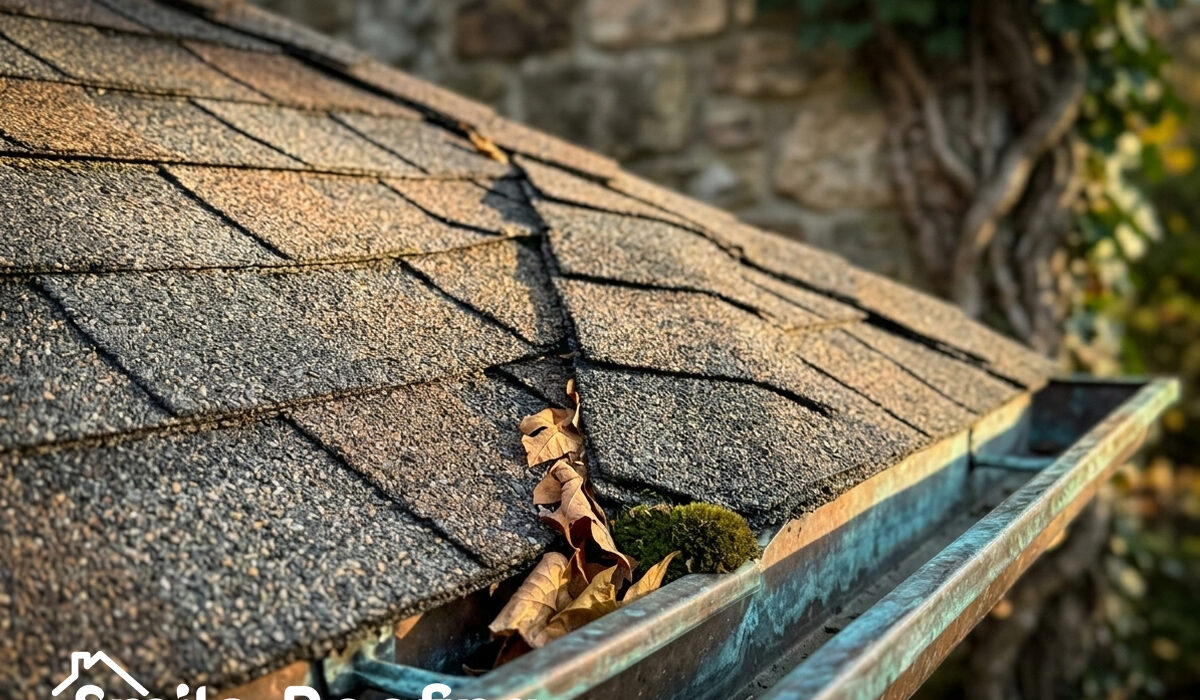
Early-stage changes: slight color fade on the most exposed slope and modest granule shedding in gutters
Mid-stage changes: small exposed asphalt spots, minor surface fissures, localized blister clusters, and inconsistent sealing
Late-stage changes: widespread cracking, tab loss, persistent edge lift, and visible thinning across large areas of the roof plane
The key is to treat early-stage signs as decision points, not as something to ignore until damage becomes obvious.
Heat damage is often an under-the-shingle problem: deck temperature, attic conditions, and ventilation balance
How heat bakes shingles from beneath even when the top looks fine
A roof is a system. The shingle is the top layer, but the heat environment under it matters. When attic temperatures rise, the roof deck stores heat and transfers it upward into the shingles. The shingle then experiences heat from above and below. That accelerates aging even if the surface looks relatively normal.
Roof deck heat transfer and why late-afternoon peaks matter
Peak temperatures often occur later in the day after the roof has been absorbing sun for hours. This is when the roof deck is most heat-soaked. If the attic has limited airflow, the deck stays hot longer, and shingles remain at elevated temperature for more time each day. That extended exposure is what drives faster aging, not only the hottest moment.
The sealing strip’s vulnerability during repeated hot and cool cycles
The sealing strip helps shingles resist wind lift and limit water entry at tab edges. In a roof that experiences constant thermal cycling, adhesion can become inconsistent. Shingles can become less pliable, and that can weaken the ability of the adhesive to maintain a uniform bond. When this happens, it can look like minor lifting or uneven tab edges long before a leak appears.
Ventilation math in plain terms: intake, exhaust, and imbalance problems
Ventilation is often discussed like a checklist item, but the details matter. A balanced system needs intake and exhaust. Intake commonly comes from soffits, and exhaust is often at the ridge or high vents. If there is insufficient intake, exhaust vents can pull air from the wrong places, such as attic access hatches or gaps around ducting, and that reduces effective airflow.
Blocked soffits, short-circuit airflow, and underperforming ridge vents
In real homes, soffit vents can be blocked by insulation or by construction details. Some attic designs create short-circuit airflow, where air enters and exits too close together without flushing the whole attic. When airflow is limited, the attic holds heat, and the roof deck remains hotter for longer.
Fans and venting pathways that can introduce moisture stress
Bathroom fans and dryer vents that discharge into the attic can raise humidity levels and create condensation cycles. That moisture adds stress to decking and fasteners, and it can also influence how the roof system handles temperature swings. Even if the roof covering is intact, moisture cycling can weaken the system beneath.
Moisture plus heat accelerates aging and can mimic mystery leaks
Moisture problems are often misread because the symptoms are not always obvious. Condensation can form when warm, moist air meets cooler surfaces. Over time, that moisture can affect the roof deck, insulation, and the overall stability of the roof assembly.
Condensation cycles that weaken decking and fasteners
Repeated wetting and drying can degrade wood components and corrode metal fasteners. If the roof already has heat-driven brittleness, small shifts in the deck can translate into visible shingle distortion.
How trapped moisture increases shingle distortion and curling risk
Trapped moisture can change how materials expand and contract. When a roof assembly is cycling between hot and damp conditions, shingles may show curling or irregularity that looks like a surface issue, even though the root cause is below.
The slope-by-slope damage patterns that point to UV and heat acceleration
Curling, cupping, and edge lift: what each pattern usually means
Curling is one of the most common signs that a roof is aging under sun and heat stress. It can appear at edges or across tabs. Cupping can make shingle edges curl upward while the center remains flatter. Edge lift is when the shingle edge is raised, which can allow wind-driven water to enter.
Edge curling linked to brittleness and thermal cycling
As shingles lose flexibility, they resist laying flat. Thermal cycling magnifies this. When the roof heats, materials expand, and when the roof cools, they contract. A flexible shingle tolerates this movement. A brittle shingle responds with distortion.
Cupping tied to uneven aging across shingle layers
Cupping can occur when different parts of the shingle age differently. Sun exposure, manufacturing differences, ventilation conditions, and deck temperature can all play a role. The pattern matters because it helps determine whether the issue is localized or system-wide.
Blisters and bubbles: when heat expansion exposes weak spots
Blistering can occur when trapped moisture or gases expand under the surface. Small blisters are not always an emergency, but clusters can be a signal of material stress, ventilation issues, or a roof that is aging faster on a particular plane.
Why blister clusters matter more than one-off blisters
A single blister can have multiple explanations. A cluster suggests a repeated condition across a zone, which is more likely to be tied to heat, moisture cycling, or widespread surface aging. In those cases, it is safer to treat the symptom as a system signal.
Sealing-strip and adhesion failures: when shingles stop behaving like a locked system
Shingles are designed to work as an overlapping, sealed field. When adhesion becomes inconsistent, the roof becomes more vulnerable to wind and water. This can happen without a storm. It can be driven by heat aging, UV degradation, or a combination of both.
Poor adhesion can become a wind problem even without storms
When shingles are not fully sealed, routine winds can lift tabs, creating minor openings that allow water intrusion during rain. The roof can look intact in calm weather and still be vulnerable in typical seasonal conditions.
Safe homeowner checks that reveal UV and heat problems without climbing on the roof
Ground-level visual checks that correlate with accelerated aging
A homeowner does not need to climb onto a roof to notice key warning signs. From the ground, look for uneven fading between slopes, patchy discoloration that looks like exposed asphalt, and irregular lines that suggest distortion. Also pay attention to roof edges, ridges, and the areas around vents and chimneys where heat tends to concentrate.
When one slope looks significantly older than another, it is often an exposure-driven aging pattern. That can be normal to a point, but it is also a reason to check whether the roof is aging faster than expected on the hottest plane.
Gutter and downspout evidence: reading granules like roof sand
Gutters often show the earliest evidence of granule loss. It can look like coarse sand in the trough. A small amount over time can be normal, especially after a new roof is installed. A sudden or increasing amount can be a warning sign.
What a sudden increase in granules often indicates
A spike in granules can indicate that the roof surface is shedding more than normal due to UV breakdown, abrasion, or heat-aged brittleness. It can also indicate localized wear on a particular plane where exposure is most intense.
How to distinguish seasonal shedding from abnormal loss
Seasonal shedding tends to be consistent and modest. Abnormal loss often appears as heavier deposits, repeated accumulation after cleaning, or granules that continue to appear without an obvious reason. If the roof is older, abnormal granule loss is more likely to be tied to surface aging.
When symptoms deserve a professional assessment before a leak forces the timeline
When you see persistent curling, widespread granule accumulation, blister clusters, or visible balding, it is smart to document it and have the roof evaluated. A clear inspection can identify whether the issue is primarily UV surface wear, heat-driven aging from below, or a combination.
From our side, the goal of an evaluation is clarity, not pressure. A book a free roof inspection is a straightforward way to get a professional read on slope condition, ventilation performance indicators, and vulnerable details like flashing and valleys.
UV and heat damage that gets mistaken for storm damage and why the wrong fix wastes effort
Thermal cracking versus wind damage: similar look, different cause
Cracks and missing pieces can look like storm damage, but heat-aged shingles can crack without dramatic weather. When a brittle shingle breaks, the failure edges often look sharp and dry. Wind damage often shows patterns of lifted or creased shingles that indicate movement.
The repair approach changes depending on cause. If the surrounding field is brittle, patching a few shingles may not last because adjacent shingles can break during repair or soon after.
Why brittle shingles do not respond to repairs the same way
Brittle shingles are less tolerant of manipulation. Lifting a shingle to repair a fastener or replace a tab can fracture the material. This is why a roof that is heavily heat-aged often needs a more conservative repair strategy, and in some cases, a broader plan to address the underlying aging.
Blistering versus impact marks: avoiding the wrong diagnosis
Impact marks from debris can look like blisters from a distance. The difference is that impact typically leaves a bruise or fracture pattern, while blistering often appears as raised bubbles that may later pop and expose the mat.
If blistering is widespread or clustered, it often points toward heat and moisture stress rather than a single external event. That distinction matters because treating an impact zone is not the same as addressing a system that is running too hot.
The repair trap: when surrounding field condition decides whether repairs will last
Repairs are most effective when the roof field is still resilient. When the roof is already aged and brittle, repairs can become repetitive because new stress concentrates around the repaired area.
When spot repairs accelerate future failure
A localized repair can create a stiffness mismatch. The repaired zone may be more secure, but adjacent aged shingles remain vulnerable. Heat and wind then focus stress at the boundary. This does not mean repairs are always wrong. It means the broader condition needs to be considered before choosing a narrow fix.
What repairable looks like versus postponed replacement
Repairable conditions tend to be localized and occur on a roof that still has good flexibility and consistent granule coverage across most of the field. Postponed replacement often shows widespread granule loss, curling across large sections, and repeated symptoms on the hottest slopes. In that scenario, repairs may be a short-term patch rather than a durable solution.
Extending shingle life in high UV and heat: material choices and build details that matter most
Shingle selection variables that influence solar wear
Not all shingles perform the same under intense sun. Differences in granule embedment, asphalt formulation, and shingle thickness can influence how the material handles UV exposure and heat cycling. Some shingles are designed with higher solar reflectance characteristics, which can reduce surface temperature under certain conditions. The real value is not a miracle outcome. It is incremental stress reduction over years.
Granule quality and UV resistance as practical questions to ask
When evaluating options, ask what the granule layer is designed to do in terms of UV protection and longevity. The best conversations are grounded in what the manufacturer and contractor can verify, not in sweeping claims.
Architectural profiles versus thin profiles in heat-heavy conditions
Heavier, laminated architectural shingles often have more material mass and may tolerate heat cycling better than thinner profiles, depending on the product and installation. The key is to match the shingle system to the home’s exposure and attic conditions, and to prioritize proper ventilation and underlayment details.
Underlayment and edge details that prevent heat-amplified weak points
Underlayment, drip edge, valley details, and flashing are not glamorous, but they often decide how well a roof resists water when shingles age. Heat accelerates wear at edges and transitions because these areas see movement and temperature swings. A roof built with careful detailing tends to be more forgiving as it ages.
Drip edge, valleys, and flashing as heat-movement zones
Edges heat up and cool down quickly. Valleys collect water and debris. Flashing around penetrations and walls must accommodate movement without opening gaps. When UV and heat have made shingles brittle, these details become even more important.
Ventilation upgrades that reduce thermal aging without hype
Ventilation improvements can help lower attic heat buildup and reduce deck temperature duration. The goal is not to promise dramatic temperature drops. The goal is to improve airflow consistency and reduce the number of hours the roof system spends in high-heat stress conditions.
Intake improvements first and why exhaust alone often fails
Adding exhaust without sufficient intake can create negative pressure and pull air from unintended areas. Balanced ventilation begins with ensuring intake pathways are open and properly distributed.
Shingle service considerations when replacement is on the table
When the roof has reached a point where repairs are no longer reliable, it helps to evaluate shingle replacement as a system decision that includes ventilation, underlayment, and detail upgrades. For homeowners exploring that path, our shingle roof replacement options page lays out the service category in a straightforward way without relying on overpromising.
Flat roofs under intense sun: UV and heat stress membranes differently than shingles
UV exposure on low-slope systems and why seams age faster
Flat and low-slope roofs often have more uniform sun exposure across the field. That can mean the surface ages more evenly than a shingle roof with multiple planes, but the weak points are typically seams, penetrations, drains, and transitions. UV exposure can gradually degrade membrane surfaces, and heat cycling can stress seam integrity.
Seams, penetrations, and flashing transitions as first-failure zones
Every penetration is a detail that must remain watertight while the roof expands and contracts. When heat cycles are frequent, these points are asked to flex repeatedly. Over time, small weaknesses can grow into pathways for water.
Heat cycling and expansion: the quiet force that opens water pathways
Low-slope systems experience expansion and contraction across wider spans. Movement can open small gaps at seams or flashing edges. That is why detail quality and maintenance checks matter so much. Sun-driven aging is predictable in pattern, which makes proactive observation practical.
Coatings, drainage discipline, and maintenance behaviors that reduce UV strain
Coatings can reduce surface UV exposure and help manage heat absorption depending on the system and product. Drainage matters because ponding water can add heat and accelerate surface fatigue. None of this is magic, but it can slow down how fast sun stress accumulates.
For owners comparing low-slope solutions, our flat roof replacement service page reflects the category of work without implying guarantees that depend on building conditions.
Tile roofs in hot sun: the tile holds up, but the system underneath still ages
Why tile resists UV better than shingles and how that can hide problems
Tile is naturally resistant to UV exposure and handles sun better on its surface than asphalt shingles. That durability can create a false sense of security because the visible layer may look fine while the underlayment beneath is aging. In strong sun, underlayment can experience higher temperatures for long periods, and it is the underlayment that provides the primary waterproofing function under tile.
Underlayment aging under heat: the invisible life limiter
Tile roofs often fail from beneath. Underlayment can dry out, crack, or lose integrity under prolonged heat exposure. Because the tile still looks strong, the first noticeable symptom may be a leak during rain, often around flashing points or valleys where water flow concentrates.
What failure looks like when tile is fine but underlayment is not
Common signs include leaks that appear without obvious broken tiles, staining near penetrations, or intermittent moisture issues that correlate with wind-driven rain. The roof can appear solid while the waterproof layer underneath is compromised.
Thermal movement, broken tiles, and how small failures cascade
Tile expands and contracts. Movement is normal, but when fasteners, battens, or underlayment details are stressed, tiles can slip or crack. A single cracked tile is not always a crisis, but repeated cracks or shifting tiles can expose underlayment and create concentrated water entry points.
Homeowners weighing tile system work can reference our tile roof replacement service category to understand the type of support available without relying on unrealistic expectations.
Repair vs replace when UV and heat aging is underway: a decision framework homeowners can use
A practical scoring method for real-world decisions
A helpful way to evaluate next steps is to consider four factors together:
Roof age relative to its condition, not just the calendar
Symptom density, meaning how many distinct issues appear across the field
Exposure intensity, especially the hottest, most sun-loaded slope
Ventilation and moisture indicators, including attic airflow and condensation signs
A roof with isolated symptoms and otherwise healthy shingles may be a repair candidate. A roof with widespread symptoms on the hottest planes, plus evidence of brittleness, often needs a broader plan.
What a solid scope includes so comparisons stay fair
When you compare contractor recommendations, focus on whether the scope addresses root causes. A plan that mentions shingles only, without attention to underlayment, flashing, and ventilation realities, may not match the true failure mode.
Flashing, valleys, and edge inclusions that change outcomes
These details are where water concentrates and where sun-driven brittleness shows first. Clear scope language around these components helps set expectations responsibly and reduces the chance of future surprises.
Estimating next steps without guesswork or pressure
A quote request can be used as an information tool, not a commitment. When homeowners want to understand options and scope, a request a free roofing quote can help establish a clear baseline, especially when the roof is showing accelerated aging symptoms and decisions are becoming time-sensitive.
UV and heat symptom-to-solution table: matching what you see to the most effective next move
Symptom map table for sun-driven wear patterns
| Symptom observed | Most likely UV or heat driver | Why it accelerates | Best next step | Wait risk level |
|---|---|---|---|---|
| Heavy granules in gutters | UV breakdown and surface erosion | Thinner protective layer raises surface temperature | Document patterns and get an assessment | Medium |
| Curling edges across one slope | Heat-driven brittleness and thermal cycling | Loss of flexibility increases cracking and tab lift | Evaluate slope condition and adhesion | Medium to high |
| Patchy exposed asphalt spots | Granule loss plus UV exposure | Exposed asphalt absorbs more heat and oxidizes faster | Review extent and surrounding field health | High |
| Blister clusters | Heat expansion, moisture cycling, or material stress | Weak spots can rupture and expose the mat | Identify if localized or widespread | Medium |
| Tabs not sealing consistently | Heat aging and adhesion inconsistency | Wind can lift tabs and drive water under shingles | Check sealing and ventilation factors | High |
| Repeated leaks near transitions | Flashing stress plus heat movement | Movement opens pathways as materials age | Focus on detail integrity, not only field shingles | High |
How to use the table without overreacting
The table is meant to guide attention, not trigger panic. One symptom in isolation can have multiple explanations. Patterns matter. If several symptoms appear on the hottest slope at the same time, that combination is a stronger indicator of accelerated UV and heat aging.
Which symptoms can be monitored
Light, consistent granule accumulation without other signs can be monitored, especially if shingles remain flat and sealing appears intact. Minor color changes can also be normal on highly exposed slopes.
Which symptoms deserve same-month attention
Persistent curling, widespread exposed asphalt, multiple blister clusters, and clear tab adhesion issues deserve attention because they can progress into wind vulnerability and water entry pathways even in regular weather conditions.
Contractor selection for sun-driven roof wear: questions that reveal whether the plan fits the real failure mode
Questions that show whether a plan addresses causes, not just symptoms
A useful contractor conversation centers on diagnosis and scope clarity. Ask how the roof will be evaluated slope by slope. Ask what indicators will be checked for ventilation balance. Ask how flashing and transitions will be handled, especially if the roof shows uneven aging.
When a contractor can explain why the hottest slope is failing faster and how the plan reduces that stress, it signals a better fit than a generic recommendation.
Why documentation and clear scope language reduce surprises
Photos, measured roof data, and written scope details help homeowners compare options responsibly. A clear scope also builds trust because it shows exactly what will be addressed and what will not.
Where to see our service approach and capabilities
For homeowners who want to understand our approach to roof evaluation, repair, and replacement work, the roof repair and replacement contractor overview page provides a straightforward view of what we do and how we support homeowners in sun-heavy conditions.
Keeping shingles younger longer: seasonal actions that interrupt UV and heat acceleration
Maintenance behaviors that catch heat-driven wear before it becomes replacement-only
Sun-driven roof wear is predictable in where it shows up first. That makes routine observation useful. Look at the hottest slope at least a couple of times per year from the ground. After strong heat spells, check for visible distortion lines and new curling. After rain, look for signs of overflow, debris accumulation in valleys, and any staining that suggests water is not draining cleanly.
A clean roof surface helps too. Debris can hold moisture, and moisture cycling combined with heat accelerates material fatigue. Keeping valleys and gutters clear is a simple way to reduce stress without overpromising what it can accomplish.
Small upgrades with outsized payoff in heat-heavy environments
Balanced ventilation and proper insulation alignment matter because they reduce the number of hours the roof system spends heat-soaked. Even modest improvements in airflow consistency can help reduce deck temperature duration. Detail improvements at flashing and edges also matter because those are the zones where aging materials are most likely to open pathways for water.
When changing roof type becomes the smarter long-term heat strategy
Sometimes the most practical decision is to choose a roof system that better matches the building’s sun exposure, slope design, and maintenance preferences. Shingles can perform well when properly installed and supported by good ventilation and detailing. In intense sun, some homeowners choose to evaluate other systems for durability and performance characteristics. The safest way to approach that decision is to weigh realistic lifecycle expectations, maintenance behavior, and system details, not to chase a single feature or claim.
Building a roof plan that anticipates sun exposure instead of reacting to it
UV and heat are not occasional stressors in sunny regions. They are daily forces that gradually change how shingles behave. The most reliable path is a plan that treats the roof as a system. Start with accurate information about the roof’s layout and the worst-exposed slopes, pay attention to early surface signs like granule loss and curling, and make decisions that address both the visible symptoms and the underlying heat environment beneath the shingles.