

Flat Roofing Magnolia Park, CA
Call For FREE Inspection
No Pressure & No Obligation
Get A Full Detailed Roofing Report & Quote!
-
Inquiry Form
Call us directly or complete the form to assess your roofing needs
-
Project Quote
Receive a full complimentary detailed report within 48 hours!
-
Smart Assessment
Quick and Free site assessment
-
Smile Roofing Done
From start to finish trust our experts to provide top-quality roofing services
Step 1
Submit Your Info
Help us understand your roofing needs.
Step 2
Sit Back and Smile
We’ll generate your customized roof report within hours. Leave it to us.
Step 3
Your Quote Is Ready
It’s that easy! Your full roof quote delivered within 48 hours.
Step 1
Inquiry Form
Call us directly or complete the form to assess your roofing needs
Step 2
Project Quote
Receive a full complimentary detailed report within 48 hours!
Step 3
Smart Assessment
Quick and Free site assessment
Step 4
Smile Roofing Done
From start to finish trust our experts to provide top-quality roofing services
Our Mission:
Professional Services Always Provided With A Smile
Trusted Flat Roofing Magnolia Park CA
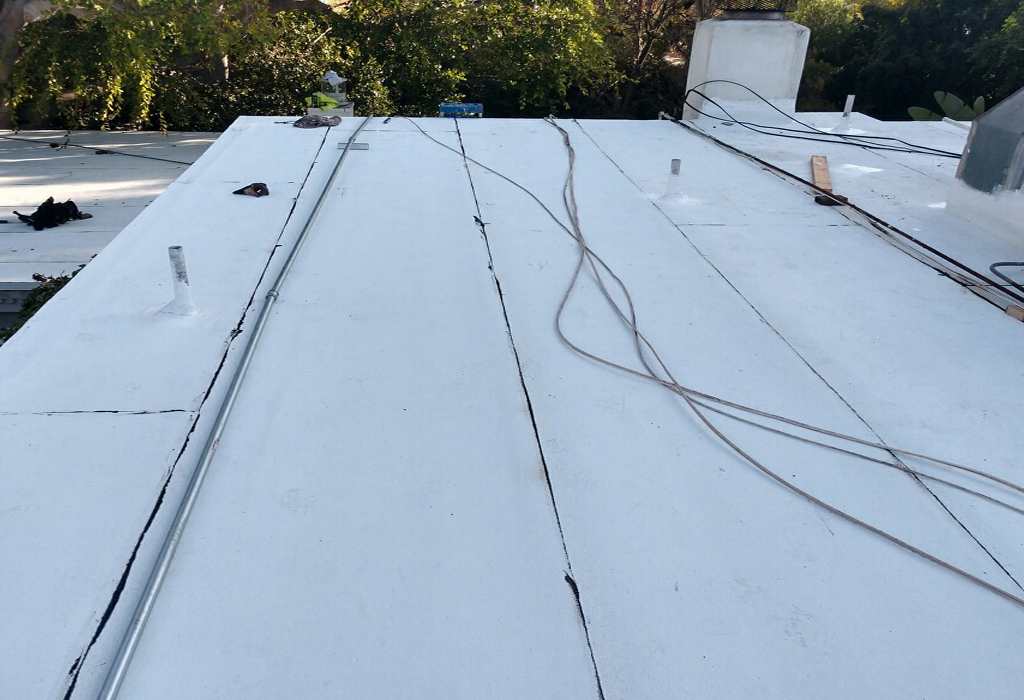
Flat roofing requires a different approach from steep slope roofing, especially when water drainage, membrane condition, roof penetrations, flashing, and material compatibility all influence how well the system performs. Smile Roofing provides flat roofing services for residential and commercial properties in Magnolia Park and throughout Burbank, helping property owners understand what is happening with their roof before deciding whether repair, restoration, coating, or replacement makes sense.
Our approach begins with the condition of the roof itself. A leak does not automatically mean the entire roof has failed, and an older flat roof does not always need immediate replacement. We look at the roofing material, drainage, previous repairs, visible damage, roof penetrations, transitions, and other relevant conditions before explaining the available options.
For property owners comparing contractors, materials, or repair recommendations, that clarity matters. Flat roofing can involve several different systems, and the right solution depends on more than the square footage of the roof.
Flat Roofing Services for Magnolia Park Properties
Magnolia Park includes residential streets as well as commercial properties around the Magnolia Boulevard area. Those different building types can create very different flat roofing needs.
Some homes have an entirely low slope roof, while others have smaller flat sections over garages, additions, patios, or other areas. Commercial properties may have larger membrane systems with rooftop equipment, vents, drains, curbs, and other penetrations that require careful waterproofing.
Smile Roofing works with both residential and commercial roofing systems. Property owners who need help beyond flat roofing can also explore our complete range of residential and commercial roofing services to understand the other roofing solutions we provide.
Residential Flat Roofing in Magnolia Park
Residential flat roofing often appears in places where homeowners do not initially think of it as a separate roofing system.
A house may have a pitched shingle or tile roof over the main living space but a low slope section over an addition, garage, patio, or rear room. These roof sections need materials designed for low slope conditions because water does not leave the surface as quickly as it does on a steep roof.
Common residential flat roofing needs include:
Repairing localized membrane damage
Finding the source of recurring leaks
Correcting deteriorated flashing
Evaluating standing or slow draining water
Replacing an aging low slope roof section
Restoring suitable roofing with a coating system
Addressing transitions between flat and pitched roofing
Inspecting penetrations such as vents and pipes
The condition of the surrounding roof also matters. A leak near a wall or transition may be caused by flashing rather than the main roofing membrane itself. That is why a proper evaluation should focus on the complete roof assembly instead of assuming that every visible water stain points directly to the source.
Where Flat Roofing Meets Shingles or Tile
Mixed roofing systems require particular attention at transition points.
When a low slope section connects to a shingle or tile roof, water has to move from one roofing system to another without entering vulnerable joints. Flashing, underlayment, slope, drainage paths, and material compatibility all contribute to how well that transition performs.
Problems at these areas may develop because of age, movement, previous repairs, deteriorated sealants, poorly installed flashing, or water collecting where two roof sections meet.
A successful repair should address the cause of the problem rather than simply covering the visible symptom.
Commercial Flat Roofing in Magnolia Park
Flat and low slope roofs are common on commercial properties because they can accommodate larger roof areas and rooftop equipment while providing practical access for maintenance.
For businesses in and around Magnolia Park, commercial roof performance can affect more than the structure itself. Roofing work may need to account for tenants, customers, operating hours, parking, delivery access, rooftop equipment, and interior spaces that need protection from leaks.
Commercial flat roof evaluations may involve:
Membrane condition
Drainage patterns
Rooftop HVAC equipment
Pipe and vent penetrations
Flashing around curbs and walls
Previous patches or repairs
Roof coating condition
Areas of repeated water accumulation
Signs of moisture below the visible surface
Accessibility for repair or replacement work
The goal is not simply to identify an aging roof. It is to determine where the system is still performing, where weaknesses are developing, and what type of work is appropriate for the building.
Roofing Around HVAC Units and Other Penetrations
Every penetration through a flat roof creates a location that must remain properly sealed.
HVAC curbs, pipes, vents, drains, skylights, and other rooftop features can become leak points when flashing deteriorates or roofing materials separate from the surrounding assembly.
Commercial buildings may have several penetrations concentrated across one roof. Even when the membrane itself remains serviceable, deteriorated flashing around equipment can allow water to enter.
These areas should be examined closely before a contractor recommends broad replacement work.
Common Flat Roof Problems in Magnolia Park
Flat roofing problems can develop gradually or become noticeable after a period of rain. Some appear as obvious leaks, while others begin with small signs such as discoloration, membrane movement, cracks, or water that remains on the roof longer than expected.
Understanding the symptom is useful, but determining the cause is more important.
Flat Roof Leaks
A flat roof leak can originate from several locations.
Potential sources include damaged membrane areas, seams, flashing, roof penetrations, drains, transitions, wall connections, or previous repair locations. Water may also travel underneath roofing materials before appearing inside the property, which means the interior stain is not always directly below the actual leak.
A focused inspection helps narrow down the source before repair work begins.
In some cases, one damaged area can be repaired while the surrounding roofing remains in useful condition. In other situations, recurring leaks in several locations may indicate broader deterioration.
Ponding and Standing Water
Water that remains on a low slope roof deserves attention because drainage is a central part of flat roof performance.
A properly designed roofing system should direct water toward drains, scuppers, gutters, or other drainage points. When water consistently remains in low areas, the cause may involve slope, blocked drainage, settlement, insulation, deck conditions, or other factors.
Ponding does not automatically mean a roof must be replaced. The correct response depends on why the water is collecting and whether it is contributing to deterioration.
Why Drainage Matters on Low Slope Roofing
Water leaves a steep roof quickly because gravity moves it down the slope. Flat roofs are different. Although they are commonly called flat, properly functioning systems still rely on enough slope and effective drainage to move water away.
Drainage problems can place additional stress on seams, flashing, membrane surfaces, and existing weak points.
During an evaluation, useful questions include:
Where does water normally leave the roof?
Are drains or scuppers clear?
Are there visible low spots?
Does one section retain water more than another?
Has the area been repaired previously?
Is the membrane showing deterioration where water collects?
Answering those questions provides a better basis for deciding what work may be necessary.
Cracked, Blistered, or Aging Roofing Materials
Flat roofing materials change as they age.
Depending on the system, property owners may notice cracking, blistering, open seams, worn coatings, surface deterioration, exposed reinforcement, or areas where the membrane has pulled away from adjoining components.
One visible defect does not necessarily define the condition of the entire roof. The surrounding material should also be evaluated.
Age matters, but condition matters more. Two roofs of similar age can perform differently depending on material, installation quality, exposure, maintenance history, drainage, and previous repairs.
Flashing and Roof Penetration Problems
Flashing helps protect some of the most vulnerable areas of a roof.
On a flat roof, this can include walls, parapets, equipment curbs, vents, pipes, drains, edges, and transitions. Movement, weather exposure, aging materials, and previous repairs can all affect these details.
When flashing fails, patching the field membrane may not solve the leak. The repair needs to address the actual point where water is entering.
Flat Roof Repair or Replacement: How to Decide
One of the most common questions we hear is whether a flat roof can be repaired or whether replacement is necessary.
There is no single answer for every property.
The right decision depends on the location and extent of damage, overall roof condition, previous repairs, moisture intrusion, drainage, material type, and the expected remaining service life of the system.
When Flat Roof Repair May Be Enough
Repair may be appropriate when the problem is localized and the surrounding roof remains in serviceable condition.
Examples can include a damaged section of membrane, isolated flashing failure, a problem around a penetration, or a limited seam issue.
A repair decision should consider whether the affected materials can be properly integrated with the existing roof. Simply applying sealant over a deteriorated area may provide only temporary relief if the underlying problem is more extensive.
When Replacement May Make More Sense
Replacement may become more practical when deterioration is widespread or when repeated repairs are no longer providing dependable results.
Conditions that can influence that decision include:
Multiple recurring leaks
Widespread membrane deterioration
Extensive seam failure
Significant moisture below the roofing
Damaged or deteriorated decking
Persistent drainage problems
Numerous previous repair areas
A system approaching the end of its useful service life
Replacement should be based on the actual roof condition, not on a single symptom.
Can a Roof Coating Extend the Life of a Flat Roof?
A roof coating can be useful when the existing roofing system is an appropriate candidate for restoration.
Coatings may help protect certain roof surfaces and improve reflectivity, but they are not a universal substitute for repair or replacement. A coating should not be used to hide active moisture, failing materials, serious drainage problems, or structural deterioration.
Before recommending a coating, the roof should be evaluated to determine whether the existing system provides a suitable foundation.
Flat Roofing Materials and Systems
Several roofing systems can be used on flat and low slope roofs. Each has different characteristics, installation requirements, maintenance considerations, and potential applications.
The right choice depends on the property rather than on a single material being best for every roof.
TPO Roofing
TPO is a single ply roofing membrane commonly used on low slope buildings.
It is available in reflective colors and is frequently considered for both commercial roofs and certain residential applications. TPO systems rely on properly installed seams, flashing, attachment, and detailing around penetrations.
For property owners comparing TPO with other options, factors such as roof configuration, existing materials, drainage, access, and project goals should be considered.
PVC Roofing
PVC is another single ply membrane used for low slope roofing.
It can be selected for commercial or specialty applications depending on the needs of the property. As with other membrane systems, performance depends heavily on installation quality and detailing at seams, edges, walls, and penetrations.
Material selection should take the entire roof assembly into account.
Modified Bitumen Roofing
Modified bitumen is an asphalt based roofing system developed for low slope applications.
It is commonly installed in sheets and may be used on residential or commercial properties. Different installation methods and product configurations are available, which means the appropriate approach depends on the existing roof and project conditions.
Modified bitumen can be particularly relevant when evaluating buildings that already have compatible asphalt based roofing materials.
Roof Coating Systems
Roof coatings are used on suitable existing roofing systems as part of restoration or maintenance strategies.
Before coating work begins, underlying defects generally need to be addressed. Applying a coating over unresolved leaks, trapped moisture, failed flashing, or severely deteriorated materials does not correct those underlying conditions.
A roof inspection helps determine whether restoration is appropriate.
Reflective and Cool Roofing Considerations
Reflective roofing materials can reduce the amount of solar energy absorbed by the roof surface.
California and local project requirements may also influence roofing product selection in some circumstances. Because requirements can depend on the building, project scope, roofing system, and applicable code, material compliance should be confirmed for the specific project rather than assumed from a general rule.
For Magnolia Park property owners, this is another reason material selection should be part of a complete roofing evaluation.
Our Flat Roof Inspection and Planning Process
A useful roofing recommendation begins with understanding what is already on the property.
Our process is designed to identify the condition of the roof, explain what we find, and help the property owner compare practical options.
Understanding the Existing Roof
The first step is identifying the type of roof and its current condition.
That can include reviewing:
Existing roofing materials
Approximate roof age when known
Visible deterioration
Previous repair areas
Roof transitions
Drainage
Penetrations
Flashing
Areas associated with reported leaks
General accessibility and project conditions
This provides context for any repair or replacement recommendation.
Identifying Leaks, Drainage Issues, and Weak Points
Flat roof problems often involve multiple components rather than one obvious defect.
A leak near a vent may involve flashing. Water near a wall may be entering from a transition. Ponding may be connected to a low area rather than a membrane failure.
Looking at these relationships helps avoid oversimplifying the problem.
Satellite Roof Measurements and Project Planning
Satellite based roof measurements can be useful during early project planning.
They can help estimate roof dimensions and give us information that supports preliminary discussions about scope. This can make the first stage of the process more convenient for property owners who want to understand possible options.
However, measurements alone cannot show everything happening on the roof.
Why Satellite Measurements Do Not Replace Every Onsite Inspection
A satellite image may show the size and shape of a roof, but it cannot reliably confirm every condition that affects a roofing recommendation.
It may not reveal trapped moisture, weakened decking, open seams, failing flashing, material brittleness, drainage performance, or the exact cause of an active leak.
For that reason, an onsite evaluation may still be necessary before a final scope of work is recommended.
Reviewing Repair and Replacement Options
Once the roof has been evaluated, the next step is understanding the available options.
That may mean a focused repair, restoration work, coating, replacement, or additional investigation if the source of a problem is not yet clear.
The purpose of the conversation is to help the property owner understand why an option is being recommended and what conditions influenced that recommendation.
What Affects the Cost of Flat Roofing in Magnolia Park?
Flat roofing costs vary because each roof has its own size, materials, access conditions, existing layers, drainage details, and repair needs.
A price based only on square footage can miss important parts of the project.
Roof Size and Accessibility
Roof size influences material and labor requirements, but accessibility also matters.
A roof that is simple to access may involve different project conditions from one surrounded by structures, limited working space, equipment, or other obstacles.
Existing Roofing Layers and Tear Off Requirements
The existing roof affects how new work is planned.
Some projects may require removal of old roofing before the condition of the deck can be fully evaluated. Other situations may allow different approaches depending on applicable requirements, material compatibility, and roof condition.
Roofing Material
TPO, PVC, modified bitumen, coatings, and other flat roofing solutions have different material and installation requirements.
Cost should be considered together with suitability, expected performance, maintenance needs, and the condition of the existing roof.
Decking and Structural Conditions
The visible membrane is only one part of the roofing assembly.
If decking is deteriorated or moisture has affected underlying materials, additional work may be required before the new roofing system can be installed correctly.
Those conditions are not always known until the roof is inspected or existing materials are removed.
Drainage, Flashing, and Roof Penetrations
Roof complexity can affect the scope of work.
A simple open roof area may require less detailing than a roof with numerous drains, parapet walls, equipment curbs, vents, pipes, and transitions.
These details should be included when evaluating the project rather than treated as afterthoughts.
Permitting and Project Requirements
Permit and inspection requirements can vary depending on the scope of the roofing project.
Material requirements may also apply depending on the property and type of work. These factors should be reviewed as part of project planning so the estimate reflects the work actually required.
Flat Roofing for Magnolia Park Homes and Businesses
Magnolia Park combines residential properties with an established commercial area, creating a range of roofing conditions within the same neighborhood.
A useful local roofing service should recognize those differences rather than treating every flat roof as the same type of project.
Flat Roofing for Homes, Garages, and Additions
Residential flat roofing often involves smaller sections that interact with the rest of the house.
Garages, additions, patios, and low slope extensions can develop problems that are different from those on the main pitched roof.
These sections may require particular attention to walls, edges, drainage, transitions, and adjoining roofing materials.
When only one part of the house has a flat roof, it is important to evaluate how that section connects to the rest of the roofing system.
Flat Roofing for Magnolia Boulevard Area Businesses
Commercial properties along and around the Magnolia Boulevard area may have flat or low slope roof systems that support equipment, vents, drainage components, and other building features.
Roofing work on an occupied commercial property may also need to account for customer access, tenants, parking, business operations, and interior protection.
Planning the work carefully helps property owners understand what will happen before repairs or replacement begin.
Planning Roofing Work Around Occupied Properties
Roof work does not happen in isolation from the people using the building.
For occupied homes and businesses, planning can include access, debris control, material placement, interior protection, equipment coordination, and communication about the work being performed.
These details are particularly important when the roof is part of an active commercial property.
Roofing Permits and Project Considerations in Burbank
Magnolia Park is part of Burbank, so roofing projects may be subject to Burbank permitting, inspection, and applicable building requirements.
The specific requirements depend on the work being performed.
When Roofing Work May Require Permits
Some reroofing and roof replacement projects may require permits and inspections.
The exact process can vary based on scope, building type, existing conditions, and the proposed roofing system. Property owners should not assume that every repair or replacement follows the same process.
Permit considerations should be addressed during project planning.
Cool Roof and Material Requirements
Certain roofing projects may need to meet applicable requirements for roofing materials, including reflectance related standards where required.
Because requirements can change according to project circumstances, roofing products should be selected with the specific property and approved scope in mind.
The safest approach is to verify the requirements that apply to the actual project rather than relying on broad assumptions.
Why Property Owners Choose Smile Roofing
Choosing a flat roofing contractor involves more than comparing materials or looking at one estimate.
Property owners need to understand what is being recommended, why it is being recommended, and whether the proposed scope fits the actual condition of the roof.
Licensed Roofing Experience
Smile Roofing is a California roofing contractor operating under C39 license number 1041262.
We provide residential and commercial roofing services across Southern California and work with flat and low slope roofing systems as part of our broader roofing capabilities.
Clear, Low Pressure Recommendations
We believe property owners should understand the roof before committing to major work.
If a localized repair appears appropriate, the conversation should explain that option. If broader deterioration makes replacement more practical, the reasons should be clear.
Our goal is to make the decision easier to understand rather than creating unnecessary pressure.
Residential and Commercial Roofing Knowledge
Residential and commercial flat roofs can require different approaches.
A small low slope section on a home may involve transitions to shingles or tile. A commercial roof may include HVAC equipment, multiple drains, wall details, and numerous penetrations.
Understanding those differences helps us develop recommendations around the property rather than applying the same solution everywhere.
Real Roofing Project Experience
Property owners who want to see examples of completed roofing work can review our recent roofing projects for a broader look at the types of residential, commercial, flat roofing, coating, and replacement work associated with Smile Roofing.
Questions Magnolia Park Property Owners Often Ask
Does Smile Roofing Provide Flat Roofing in Magnolia Park?
Yes. Smile Roofing provides flat roofing services for residential and commercial properties in Magnolia Park as part of our service coverage in Burbank and surrounding Southern California communities.
We do not represent Smile Roofing as having a physical office in Magnolia Park. Our role is to serve property owners in the area with inspection, repair, replacement, restoration, and roofing consultation services.
Can You Repair a Flat Roof Without Replacing It?
Yes, some flat roofs can be repaired without complete replacement.
Repair may be appropriate when the damage is localized and the surrounding roofing remains in serviceable condition. The extent of the damage, roof age, drainage, material condition, previous repairs, and any underlying moisture should be considered before deciding.
What Causes Water to Pool on a Flat Roof?
Ponding water can result from low areas, drainage problems, blocked drains or scuppers, settlement, insulation conditions, deck changes, or inadequate slope.
The cause should be identified before deciding how to correct the problem.
Which Flat Roofing Material Is Best?
There is no single flat roofing material that is best for every property.
TPO, PVC, modified bitumen, and coating systems each have different applications. The appropriate option depends on roof configuration, existing materials, drainage, building use, exposure, condition, and project goals.
Can a Coating Stop Flat Roof Leaks?
A coating may be part of a restoration solution when the existing roof is suitable for coating and necessary repairs have been completed.
It should not be expected to solve every active leak or compensate for widespread material failure, trapped moisture, serious drainage issues, or damaged decking.
Do You Work on Residential and Commercial Flat Roofs?
Yes. Smile Roofing works with both residential and commercial flat roofing.
Residential projects may include garages, additions, patios, and mixed roofing systems. Commercial projects may involve larger roof areas, equipment curbs, drains, penetrations, and other details.
How Is Flat Roofing Cost Determined?
Flat roofing cost depends on the specific roof.
Important factors include size, material, access, existing roofing layers, tear off requirements, deck condition, flashing, penetrations, drainage, permit requirements, and the scope of repair or replacement.
A property specific evaluation provides a more useful basis for pricing than a universal square foot estimate.
Does Flat Roofing Work Require a Permit in Burbank?
Some roofing projects may require permits and inspections depending on the scope of work.
Because requirements can vary, permit needs should be confirmed for the specific property and roofing project.
Can You Estimate a Roof Using Satellite Measurements?
Satellite measurements can help with early planning and roof dimensions, but they do not replace every onsite inspection.
An in person roof evaluation may still be necessary to assess leaks, membrane condition, drainage, flashing, decking, penetrations, or other conditions that cannot be confirmed from aerial measurements.
How Do I Know Whether My Flat Roof Needs Replacement?
Replacement may be worth considering when the roof has widespread deterioration, recurring leaks, significant moisture intrusion, extensive seam or flashing problems, damaged decking, or a long history of repeated repairs.
The decision should be based on the overall roof condition rather than age alone.
What Should I Do If My Flat Roof Starts Leaking?
Protect the interior from additional water where it is safe to do so and arrange for the roof to be evaluated.
Avoid assuming that the visible indoor leak identifies the exact entry point. Water can travel underneath roofing materials before reaching the interior.
A roofing inspection can help determine where the problem begins and whether a focused repair is practical.
Get Clear Guidance for Your Magnolia Park Flat Roof
Flat roofing decisions are easier when you understand what the roof actually needs.
Whether you are dealing with a leak, ponding water, aging materials, deteriorated flashing, a commercial membrane system, or a low slope section on a home, Smile Roofing can evaluate the condition and explain the available options.
We approach flat roofing with the understanding that repair, restoration, coating, and replacement each have their place. The right recommendation depends on the property, the roofing system, and the condition we find.
If you need help with flat roofing in Magnolia Park, you can schedule a roofing consultation with Smile Roofing to discuss your roof, the concerns you are seeing, and the next practical step.


Contact Form