

Flat Roofing West Covina, CA
Call For FREE Inspection
No Pressure & No Obligation
Get A Full Detailed Roofing Report & Quote!
-
Inquiry Form
Call us directly or complete the form to assess your roofing needs
-
Project Quote
Receive a full complimentary detailed report within 48 hours!
-
Smart Assessment
Quick and Free site assessment
-
Smile Roofing Done
From start to finish trust our experts to provide top-quality roofing services
Step 1
Submit Your Info
Help us understand your roofing needs.
Step 2
Sit Back and Smile
We’ll generate your customized roof report within hours. Leave it to us.
Step 3
Your Quote Is Ready
It’s that easy! Your full roof quote delivered within 48 hours.
Step 1
Inquiry Form
Call us directly or complete the form to assess your roofing needs
Step 2
Project Quote
Receive a full complimentary detailed report within 48 hours!
Step 3
Smart Assessment
Quick and Free site assessment
Step 4
Smile Roofing Done
From start to finish trust our experts to provide top-quality roofing services
Our Mission:
Professional Services Always Provided With A Smile
A flat roof can protect a home, business, rental property, or multifamily building for years when its membrane, drainage, flashing, and supporting structure work together correctly. Once one part of that system begins to fail, however, water can travel beneath the visible surface and make the source of a leak difficult to identify.
At Smile Roofing, we provide flat roofing services for property owners in West Covina who need clear answers about leaks, aging materials, drainage concerns, roof coatings, repairs, or complete replacement. We approach each roof as a separate system rather than assuming that every problem requires the same solution.
Our goal is to help you understand what is happening, what options are practical, and why a particular service may be recommended. Whether you are dealing with a small opening around a roof penetration or widespread deterioration across an older membrane, the process should begin with a careful evaluation.
Flat Roof Repair, Restoration, and Replacement for West Covina Properties
Flat roofing is not one service. It includes inspection, leak diagnosis, localized repair, drainage correction, restoration, coating, reroofing, and full replacement.
The right direction depends on several connected factors:
The type and age of the existing roof
The location and extent of visible damage
The condition of seams, flashing, drains, and penetrations
Whether moisture has reached the insulation or roof deck
The number and quality of previous repairs
The amount of useful service life remaining
The building’s use, access, and budget
A newer roof with an isolated puncture may be a reasonable candidate for repair. An older roof with recurring leaks in several areas may require a broader solution. A coating may be considered when the existing surface is compatible and the underlying assembly remains stable, but a coating should not be used to conceal saturated insulation or structural damage.
Our broader residential and commercial roofing services allow us to evaluate the flat roof in relation to the entire property rather than treating one visible symptom in isolation.
Residential Flat Roofing Services
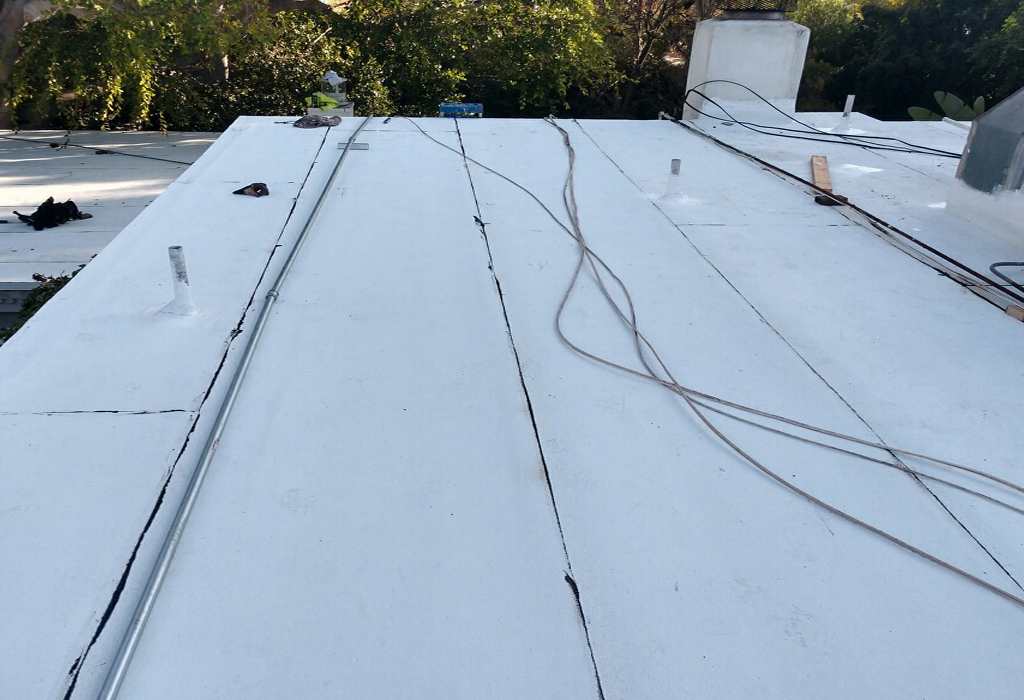
Many homes have flat or low-slope sections over additions, garages, patios, balconies, porches, or modern architectural areas. These sections can perform well, but they require proper drainage and careful detailing because water does not leave the surface as quickly as it does on a steep roof.
Residential flat roof concerns often include:
• Water stains on ceilings or walls
• Leaks where a flat section meets a pitched roof
• Cracked or lifting membrane edges
• Failed sealant around vents and pipes
• Standing water after rain
• Soft areas beneath the surface
• Repeated patching in the same location
• Deterioration along parapets or roof edges
Flat Roof Sections on Homes, Garages, and Additions
Transitions are especially important on residential roofs. A leak may begin where two roof types meet, around a wall connection, beneath edge flashing, or near a drain that no longer clears water efficiently.
We inspect these transition areas carefully because the visible interior stain may not be directly below the exterior opening. Water can move beneath the membrane, along framing, or through insulation before appearing inside.
Repairing Leaks Before Interior Damage Spreads
A roof leak should be evaluated promptly, but urgency should not replace diagnosis. Applying sealant to the first visible crack may not solve the actual problem.
A useful inspection looks beyond the surface and considers:
• The path water is likely to follow
• The condition of surrounding seams
• Signs of trapped moisture
• Drainage patterns
• Previous repair materials
• Openings around roof-mounted equipment
The goal is to make a repair that addresses the cause, not simply cover the nearest visible symptom.
Commercial Flat Roofing Services
Commercial flat roofs often cover larger areas and may contain HVAC units, ducts, vents, conduit, drains, skylights, access points, and other penetrations. Each opening creates a detail that must remain sealed while the roof expands and contracts under changing temperatures.
Commercial roofing decisions may also affect tenants, customers, employees, inventory, equipment, and operating schedules. Clear planning is therefore as important as material selection.
Roofing for Retail, Office, Rental, and Multifamily Properties
Different properties create different roofing priorities. A retail building may need work scheduled around customer traffic. A rental property may require communication with occupants. A multifamily building may involve shared access areas and several interior units beneath one roof.
For commercial and income-producing properties, we focus on practical project planning, documented findings, scope clarity, drainage performance, and the long-term consequences of delaying necessary work.
Planning Roofing Work Around Building Operations
Some businesses may be able to remain open during portions of a roofing project, while others may need temporary access restrictions or adjusted work hours. The answer depends on the building layout, safety requirements, noise, odor, material handling, roof access, and the scope of removal.
These considerations should be discussed before work begins so the roofing plan accounts for both the roof and the people using the property below it.
How to Know What Your Flat Roof Needs
A leak does not automatically mean the roof must be replaced. It also does not automatically mean a small repair will be enough.
The recommendation should be based on the roof’s overall condition and the likelihood that the proposed solution will provide dependable performance.
When a Flat Roof Repair May Be Practical
A repair may be considered when the problem is limited, the surrounding material remains serviceable, and there is no evidence of widespread moisture below the surface.
Localized Membrane Damage
A puncture, split, open seam, or small damaged area may be repairable when the membrane around it is still stable. The repair method must be compatible with the existing roofing material.
A patch that does not bond correctly, traps moisture, or uses an incompatible product can fail early. This is why identifying the existing system matters before choosing a repair material.
Flashing and Roof Penetration Leaks
Many flat roof leaks develop around:
• Vent pipes
• HVAC equipment
• Skylights
• Wall transitions
• Parapets
• Roof edges
• Drains
• Scuppers
• Conduit supports
If the surrounding roof remains in reasonable condition, repairing the flashing or resealing the penetration may resolve the problem. The inspection should also determine whether movement, poor drainage, or an underlying installation issue contributed to the failure.
When Roof Restoration or Coating May Be Considered
A restoration system may extend the useful life of a suitable flat roof, but it is not appropriate for every roof.
Evaluating the Existing Membrane and Roof Deck
Before considering a coating, the roof should be evaluated for adhesion, moisture, damaged insulation, structural concerns, active leaks, and compatibility with the proposed material.
A roof with widespread wet insulation or a deteriorated deck generally needs more than a surface treatment. Covering moisture can make future damage harder to detect and may shorten the life of the restoration.
Understanding Coating Compatibility
Coatings are designed to work with specific surfaces and preparation methods. Cleaning, repairing seams, reinforcing penetrations, correcting drainage concerns, and applying the required thickness are all important.
A coating is not the same as installing a new membrane. It is a restoration approach that may be useful when the existing assembly meets the necessary conditions.
When Flat Roof Replacement May Be the Better Option
Replacement may provide a more predictable result when deterioration is widespread, repairs are becoming frequent, or moisture has affected components below the membrane.
Widespread Deterioration
Common signs of broader failure include:
• Cracking across large areas
• Multiple open seams
• Extensive blistering
• Brittle material
• Repeated leaks in different locations
• Failing perimeter details
• Large areas of previous patching
When damage is no longer isolated, repeated repairs may become less practical than replacing the aging system.
Saturated Insulation or Deck Damage
Water can become trapped beneath a roof membrane without remaining visible on the surface. Wet insulation may lose performance, add weight, and contribute to deterioration. A damaged roof deck may also require removal and repair before a new system can be installed.
The extent of concealed damage cannot always be confirmed through a surface inspection alone. Additional investigation may be recommended when soft areas, persistent leaks, or other warning signs are present.
Repeated Leaks and Previous Repairs
A roof with many overlapping patches can become difficult to evaluate and maintain. Previous repairs may have addressed individual symptoms without correcting drainage, movement, or membrane failure across the wider area.
Replacement may be worth considering when new leaks continue to appear and the remaining roof no longer provides a reliable base for additional repairs.
Common Flat Roof Problems in West Covina
Flat roofs in West Covina are exposed to strong sunlight, heat, temperature changes, windblown debris, and periods of rain. These conditions can affect membranes, sealants, flashing, and drainage components over time.
Ponding Water and Poor Drainage
Ponding water is water that remains on the roof after rainfall instead of flowing toward a drain, scupper, or gutter.
Small temporary puddles do not always indicate failure, but persistent standing water can place stress on seams, flashing, coatings, and low areas. It can also collect dirt and accelerate surface wear.
Roof Drains, Scuppers, and Tapered Insulation
Drainage problems may be connected to:
• Blocked roof drains
• Clogged scuppers
• Debris near drainage openings
• Insufficient slope
• Settled insulation
• Low areas in the roof deck
• Poorly positioned drainage components
• Changes caused by previous roofing work
Clearing a blockage may solve a simple problem. Other roofs may need tapered insulation, drainage modifications, or repairs to low areas. The proper response depends on why the water is collecting.
Membrane Cracks, Open Seams, and Punctures
Flat roofing materials expand and contract as surface temperatures change. Over time, movement can stress seams, transitions, and repaired areas.
Punctures may also occur from foot traffic, dropped tools, service work, branches, or improperly supported equipment. Even a small opening can allow water beneath the membrane.
Regular visual inspections can help identify these issues before they develop into larger leaks.
Flashing Failure Around Roof Edges and Parapets
Flashing protects transitions where the roof meets walls, edges, curbs, and other surfaces. These details often experience movement and may deteriorate sooner than the main field of the roof.
Warning signs include loose metal, open laps, cracked sealant, lifted membrane, gaps at wall connections, and staining below parapets.
Leaks Around HVAC Units and Other Penetrations
Commercial roofs often contain several roof-mounted systems. Residential flat sections may also contain vents, skylights, or equipment.
Leaks can develop when:
• Flashing separates from the curb
• Sealant dries or cracks
• Equipment vibration affects surrounding details
• Water collects behind a curb
• Service work damages the membrane
• Condensation is mistaken for a roof leak
A careful evaluation should consider both the roofing detail and the equipment itself.
Heat, Sun Exposure, and Material Aging
Ultraviolet exposure and surface heat can contribute to brittleness, cracking, coating wear, and sealant deterioration. Reflective roofing products may help reduce surface heat, but material selection should also account for the existing assembly, building use, drainage, code requirements, and long-term maintenance.
Flat Roofing Materials and Systems
There is no single flat roofing material that is best for every property. The correct system depends on the building, existing roof, access, slope, drainage, budget, expected service life, and project requirements.
Common flat roof categories include single-ply membranes, asphalt-based systems, built-up assemblies, and restorative coatings.
Single-Ply Roofing Systems
Single-ply systems use manufactured membrane sheets that are joined and secured according to the system design.
TPO Roofing
TPO is a reflective thermoplastic membrane commonly used on low-slope roofs. It is often selected for its light-colored surface and heat-welded seams.
Its performance depends on proper installation, seam welding, flashing details, attachment, drainage, and protection from punctures.
PVC Roofing
PVC is another thermoplastic membrane with heat-welded seams. It may be considered for certain commercial or low-slope applications based on building use and project needs.
Compatibility with surrounding materials and rooftop conditions should be evaluated before selection.
EPDM Roofing
EPDM is a synthetic rubber roofing membrane that has been used on flat and low-slope buildings. It is commonly associated with dark membrane surfaces, although system configurations vary.
Seams, flashing, attachment methods, and surface protection all affect long-term performance.
Asphalt-Based Flat Roofing Systems
Asphalt-based systems remain common on many Southern California properties.
Modified Bitumen Roofing
Modified bitumen combines asphalt with reinforcing materials and performance modifiers. It may be installed through different application methods depending on the product and project.
Maintenance often focuses on seams, laps, flashing, penetrations, surface wear, and drainage.
Built-Up Roofing
Built-up roofing uses multiple layers to create a durable roof assembly. Existing built-up roofs may contain gravel or another protective surface.
When evaluating an older built-up roof, the inspection should consider the condition of the layers, flashing, drainage, surface protection, and any evidence of trapped moisture.
Reflective Roof Coatings
Coatings can create a reflective surface and help protect a suitable existing roof from further weathering.
Silicone Roof Coatings
Silicone coatings are often discussed for their resistance to ultraviolet exposure and standing water. Surface preparation, adhesion, thickness, repairs, and compatible detailing remain essential.
Elastomeric Roof Coatings
Elastomeric coatings are designed to remain flexible as the roof surface moves. Product performance depends on the roof substrate, preparation, application conditions, and maintenance.
A coating recommendation should follow an inspection. It should not be based solely on the roof’s age or appearance.
Choosing the Right Flat Roof Solution
The best roofing decision is the one that fits the roof’s actual condition and the property owner’s practical needs.
Roof Condition and Remaining Service Life
A repair may be reasonable when most of the roof remains serviceable. Replacement may be more practical when the roof is near the end of its useful life and several components are failing.
The cost of a small repair should not be evaluated separately from the likelihood of future repairs.
Drainage and Ponding Water
Installing new material without addressing persistent drainage problems may allow the same stress to continue. Drainage should be reviewed as part of the roof system, not treated as an unrelated issue.
Building Use and Roof Access
A roof that receives frequent service traffic may need additional protection around access paths and equipment. A building with limited access may require different material handling and scheduling.
Energy and Reflectivity Considerations
Reflective materials may support comfort or energy goals by reducing surface heat. They may also relate to applicable roofing and energy requirements.
The final choice should account for the complete assembly rather than surface color alone.
Budget and Long-Term Maintenance
The lowest initial price is not always the lowest long-term cost. Property owners should consider expected maintenance, repairability, service life, disruption, warranty terms, and the condition of the existing roof.
A clear proposal should explain what is included, what conditions could change the scope, and what maintenance may be needed after completion.
Flat Roof Inspections in West Covina
A useful flat roof inspection should do more than confirm that a leak exists. It should identify likely entry points, assess the surrounding system, and explain whether the issue appears isolated or widespread.
What a Flat Roof Inspection Should Evaluate
Membrane and Seam Condition
The inspection should look for cracking, splitting, punctures, lifting, loose laps, open seams, blistering, and deteriorated repair areas.
Flashing and Penetrations
Roof edges, parapets, drains, scuppers, vents, skylights, walls, and equipment curbs should be checked for openings and failed sealant.
Drainage and Ponding Areas
Water flow, low spots, debris, blocked outlets, staining, and signs of repeated standing water should be documented.
Insulation and Deck Concerns
Soft areas, unusual movement, recurring leaks, and surface depressions may suggest issues below the membrane. Further investigation may be needed when concealed moisture or deck damage is suspected.
What Happens After the Inspection
After evaluating the roof, the next step should be a clear explanation of the findings.
A practical recommendation may include:
Localized repair
Flashing or penetration work
Drainage correction
Restoration or coating evaluation
Partial replacement
Complete roof replacement
Further moisture or structural investigation
The recommendation should explain why the proposed direction is appropriate and what limitations may apply.
The Smile Roofing Flat Roof Process
A well-planned roofing project should feel organized from the first conversation through the final review.
Initial Consultation and Property Information
We begin by learning about the property, the symptoms you have noticed, previous repairs, the roof’s approximate age, and any access or scheduling concerns.
Photos, interior leak locations, and maintenance records can be helpful, but they do not replace an on-site evaluation when the roof condition needs to be confirmed.
Roof Evaluation and Documentation
The inspection focuses on visible roofing conditions, drainage, transitions, penetrations, previous repairs, and other relevant areas.
Documentation may include photographs and notes that help explain the recommendation.
Repair, Restoration, or Replacement Recommendation
We consider whether the roof can be repaired effectively, whether restoration is appropriate, or whether replacement is likely to provide a more dependable result.
The recommendation should match the roof rather than forcing the project into a predetermined service.
Proposal and Material Selection
A roofing proposal should identify the expected scope, materials, preparation, removal, flashing work, drainage details, disposal, and other relevant items.
Material selection should reflect the building, roof design, existing conditions, code considerations, and budget.
Permit Coordination When Required
The City of West Covina identifies reroofing as work that requires a permit, including reroofing over existing materials. Exact requirements can depend on the project scope, building type, and roof assembly.
Permit and inspection requirements should be confirmed for the specific property before work begins.
Installation, Cleanup, and Final Review
During the project, the property should be protected as reasonably required for the scope of work. Materials and debris should be managed carefully, and roof details should be completed according to the selected system.
The final review should confirm that the agreed scope has been addressed and provide an opportunity to discuss maintenance or follow-up questions.
West Covina Roofing Permit and Project Considerations
Local requirements are an important part of planning a flat roof project.
When a Roofing Permit May Be Required
Reroofing in West Covina requires a building permit. Smaller repairs may be treated differently depending on their scope, so property owners should avoid assuming that every project follows the same process.
A contractor should help clarify whether the proposed work involves permitting, inspections, or additional documentation.
Building Inspection and Code Considerations
Roofing requirements may address:
• Existing layers
• Roof deck condition
• Fire classification
• Drainage
• Insulation
• Material approval
• Attachment methods
• Energy performance
• Final inspection
Requirements can vary by building and project. Any recommendation should account for the rules that apply at the time the work is planned.
Cool Roofing and Reflective Material Questions
California energy requirements may affect low-slope roofing products depending on the building type and project scope. Reflective membranes and coatings can be useful options, but compliance should not be assumed based on product color alone.
Product ratings, assembly design, insulation, roof slope, building use, and current requirements may all matter.
What Affects Flat Roofing Cost?
Flat roof pricing depends on more than square footage. Two roofs of similar size can require different scopes because of access, existing materials, drainage, equipment, and concealed damage.
Roof Size and Accessibility
Larger roofs generally require more labor and material. Access limitations can affect equipment, material delivery, safety planning, and debris removal.
Existing Roofing Layers
The number and type of existing layers can influence whether the roof can be repaired, restored, covered, or must be removed.
Removal also allows the underlying deck to be evaluated, but it adds labor, disposal, and preparation.
Membrane and Insulation Selection
Different roofing systems have different material, installation, and preparation requirements. Insulation type, thickness, cover boards, and attachment methods can also affect the cost.
Drainage, Flashing, and Deck Repairs
The project may require more than replacing the field membrane. Drains, scuppers, parapets, edges, equipment curbs, walls, and damaged decking can significantly affect the scope.
Tear-Off, Disposal, and Permit Requirements
Removal, hauling, disposal, permits, inspections, and project documentation should be considered when reviewing an estimate.
A useful proposal should make the expected scope understandable and identify conditions that could require additional work after removal begins.
Why West Covina Property Owners Choose Smile Roofing
Choosing a roofing company is not only about selecting a material. It is also about trusting the inspection, understanding the proposal, and knowing that the recommendation is connected to the actual condition of the roof.
Smile Roofing is a California roofing contractor with C39 license #1041262. We serve residential and commercial property owners who value clear communication, practical guidance, and professional project care.
Clear Recommendations Without Unnecessary Pressure
We believe property owners should understand why a repair, restoration, or replacement is being recommended.
That means discussing the condition of the membrane, drainage, flashing, penetrations, previous repairs, and visible signs of moisture rather than relying on vague statements.
Residential and Commercial Roofing Support
The needs of a homeowner are different from the needs of a commercial property manager. Our approach considers the property type, building use, access, occupants, budget, and scheduling requirements.
Professional Communication and Project Care
Roofing work can be disruptive, particularly when leaks have already affected the interior. Clear expectations, organized scheduling, property protection, cleanup, and follow-through can make the experience easier to manage.
Verified Workmanship and Project Evidence
Property owners can review our recent roofing projects to learn more about the type of work Smile Roofing performs across Southern California.
Project examples are most helpful when they show the original problem, the roofing system, the completed scope, and the finished result.
Questions West Covina Property Owners Often Ask
Can a Leaking Flat Roof Be Repaired?
Yes, many flat roof leaks can be repaired when the damage is localized and the surrounding roof remains in serviceable condition. The source should be identified before work begins because water can travel beneath the membrane and appear inside far from the actual opening.
A repair may be less dependable when deterioration is widespread, insulation is wet, the deck is damaged, or several areas have already been patched.
How Do I Know if My Flat Roof Needs Replacement?
A flat roof may need replacement when leaks occur in several areas, the membrane is brittle or extensively cracked, seams are failing throughout the roof, wet insulation is present, or repairs no longer provide reliable results.
Age alone does not determine the answer. The roof’s condition, installation, maintenance history, drainage, and previous repairs are equally important.
What Causes Ponding Water on a Flat Roof?
Ponding water can result from blocked drains, clogged scuppers, insufficient slope, settled insulation, low areas in the deck, poor drainage design, or changes created by previous roofing work.
The correct solution depends on the cause. Cleaning a drain may be enough in one case, while another roof may need tapered insulation or drainage modifications.
Is a Roof Coating the Same as a New Roof?
No. A roof coating is a restoration layer applied over a compatible existing surface after required cleaning, repairs, and preparation. A new roof membrane is a separate roofing system installed as part of a reroofing or replacement project.
Coatings can be useful on suitable roofs, but they should not be used to cover wet insulation, unstable materials, or serious deck damage.
Which Flat Roofing Material Is Best for West Covina?
There is no single best material for every West Covina property. TPO, PVC, EPDM, modified bitumen, built-up roofing, and coatings have different characteristics.
The best choice depends on the roof design, existing system, drainage, building use, heat exposure, rooftop equipment, maintenance expectations, code requirements, and budget.
Does West Covina Require a Permit for Flat Roof Replacement?
Yes. The City of West Covina identifies reroofing as work requiring a building permit, including reroofing over existing materials.
The exact process may vary based on the scope and building, so permit and inspection requirements should be confirmed before the project begins.
How Long Does Flat Roof Replacement Take?
The timeline depends on roof size, access, removal requirements, weather, material, deck repairs, equipment, inspections, and project complexity.
A smaller roof with good access may take less time than a large commercial roof with several penetrations and significant removal. The expected schedule should be discussed after the roof has been evaluated and the scope is defined.
What Affects the Cost of Flat Roof Repair?
Repair cost may depend on the location of the damage, roofing material, access, size of the affected area, flashing work, moisture below the surface, and whether drainage correction is needed.
A low-cost surface patch may not be a good value if the underlying problem remains unresolved.
How Often Should a Commercial Flat Roof Be Inspected?
A commercial flat roof should generally be checked on a regular schedule and after severe weather, equipment service, or other rooftop activity that could damage the membrane.
Inspection frequency should reflect the roof’s age, condition, warranty, drainage, maintenance history, and amount of foot traffic.
Can My Business Remain Open During Roofing Work?
Some businesses can remain open during roofing work, but the answer depends on safety, noise, odor, access, material handling, and the scope of removal.
Project planning should account for entrances, parking, tenant communication, rooftop equipment, interior operations, and any areas that need temporary restriction.
Plan Your Flat Roofing Project with Clear Information
A flat roof problem is easier to manage when you understand what is happening and what the available options mean for your property.
Smile Roofing provides flat roofing services for West Covina homes, commercial buildings, rental properties, and multifamily properties. We evaluate the condition of the roof, explain the difference between repair and replacement, and help property owners plan the next step without relying on exaggerated claims or one-size-fits-all recommendations.
Whether you are concerned about an active leak, ponding water, aging material, repeated repairs, or a roof that may be approaching replacement, the process should begin with a careful inspection and a clear conversation.
You can request a clear roofing estimate to discuss your West Covina property and the flat roofing concerns you have noticed.


Contact Form