

Flat Roofing West Hollywood, CA
Call For FREE Inspection
No Pressure & No Obligation
Get A Full Detailed Roofing Report & Quote!
-
Inquiry Form
Call us directly or complete the form to assess your roofing needs
-
Project Quote
Receive a full complimentary detailed report within 48 hours!
-
Smart Assessment
Quick and Free site assessment
-
Smile Roofing Done
From start to finish trust our experts to provide top-quality roofing services
Step 1
Submit Your Info
Help us understand your roofing needs.
Step 2
Sit Back and Smile
We’ll generate your customized roof report within hours. Leave it to us.
Step 3
Your Quote Is Ready
It’s that easy! Your full roof quote delivered within 48 hours.
Step 1
Inquiry Form
Call us directly or complete the form to assess your roofing needs
Step 2
Project Quote
Receive a full complimentary detailed report within 48 hours!
Step 3
Smart Assessment
Quick and Free site assessment
Step 4
Smile Roofing Done
From start to finish trust our experts to provide top-quality roofing services
Our Mission:
Professional Services Always Provided With A Smile
A flat roof can protect a property for years when its membrane, flashing, drainage, and supporting structure work together correctly. When one part begins to fail, however, the first signs may appear far from the actual source. A ceiling stain might come from an open seam, a deteriorated roof penetration, a clogged drain, damaged parapet flashing, or moisture moving beneath the roofing surface.
Smile Roofing provides flat roofing services for residential, multifamily, commercial, and mixed use properties in West Hollywood, California. We help property owners understand what is happening, compare practical solutions, and decide whether repair, restoration, or replacement makes the most sense.
Our approach is straightforward. We inspect the roof, explain what we find, and provide recommendations based on its actual condition. Not every leak requires a complete replacement, and not every aging roof can be solved with another patch. The right answer depends on the extent of the damage, the condition of the membrane, drainage performance, previous repair history, and whether moisture has reached the insulation or roof deck.
Flat Roof Help Without Unnecessary Pressure
Roofing problems can create immediate concern, especially when water is entering an occupied home, apartment, office, store, or other active property. It is easy to feel pressured into making a fast decision before fully understanding the cause of the problem.
We believe the first step should be clarity.
A thorough flat roof assessment can help determine:
Where water may be entering the roofing system
Whether the visible damage is localized or widespread
How well the roof drains after rain
Whether seams, flashing, penetrations, or perimeter details are failing
Whether the existing membrane can support a repair or restoration system
Whether replacement may provide better long term value
Which roofing materials are appropriate for the property
We explain these factors in practical language so you can compare your options without feeling pushed toward a predetermined solution.
Clear Recommendations Based on the Roof’s Condition
Two flat roofs can show similar symptoms while requiring very different solutions. A small opening around a vent may be repairable. A roof with widespread moisture, repeated leaks, deteriorated insulation, and failing seams may require a more comprehensive approach.
Our recommendations consider the complete roofing assembly rather than focusing only on the most visible symptom. This includes the roof surface, drainage areas, flashings, transitions, penetrations, edges, parapets, and accessible supporting components.
When to Schedule a Flat Roof Inspection
It is wise to arrange an inspection when you notice:
Water stains on ceilings or walls
Dampness near roof penetrations
Standing water that remains after rainfall
Cracks, splits, bubbles, or blisters in the roof surface
Open or lifting seams
Loose flashing around parapets or roof edges
Repeated leaks in the same area
Interior odors that may indicate trapped moisture
An aging coating that is peeling, thinning, or losing adhesion
Uncertainty about the remaining service life of the roof
An inspection can also be useful before installing rooftop equipment, planning solar work, purchasing a property, or beginning interior improvements that could be affected by future roof problems.
Flat Roof Repair, Restoration, and Replacement
Flat roofing is not a single service. Depending on the roof’s condition, the appropriate solution may involve a focused repair, a restoration coating, partial corrective work, or complete replacement.
The goal is not to recommend the largest project. The goal is to identify the most practical way to protect the building and reduce the likelihood of recurring problems.
Flat Roof Repair
Flat roof repair is often appropriate when damage is limited and the surrounding roofing system remains in serviceable condition. Repairs may involve seams, flashing, penetrations, drains, scuppers, membrane punctures, or small areas of deteriorated material.
Problems That May Be Repairable
A focused repair may be considered when:
The leak source can be clearly identified
Damage is limited to a small area
The surrounding membrane remains securely attached
The insulation and roof deck show no signs of widespread moisture damage
Drainage is generally functional
Previous repairs have not repeatedly failed
The roof still has meaningful service life
Repair work should address the source of the problem, not simply cover the visible surface. Applying material over an area without understanding why it failed can trap moisture or allow the leak to return.
When Repeated Patching Is No Longer Practical
Repeated patching can become costly when the underlying roofing system is deteriorating across multiple areas. If leaks continue to appear in different locations, seams are opening throughout the roof, or the membrane has become brittle and unstable, another patch may offer only temporary relief.
At that point, a broader restoration or replacement plan may provide better value and more predictable protection.
Flat Roof Coatings and Roof Restoration
A roof coating can sometimes extend the useful life of an existing flat roof by creating a continuous protective surface. Coating systems may also improve reflectivity and help protect the roof from sun exposure.
A coating is not a universal substitute for replacement. The existing roof must be evaluated carefully before a restoration system is recommended.
When a Roof May Be a Coating Candidate
A coating may be considered when:
The existing roof is securely attached
Moisture damage is limited or absent
The roof deck remains serviceable
Drainage problems can be corrected
Seams and penetrations can be properly prepared
The existing surface is compatible with the selected coating
The roof has broad surface wear but not widespread structural failure
Surface preparation is essential. Dirt, loose material, failed coatings, damaged seams, and incompatible repairs must be addressed before a new system is installed.
Conditions That Can Make Coating Inappropriate
A coating may not be the right solution when there is extensive trapped moisture, damaged insulation, serious deck deterioration, widespread membrane separation, major drainage failure, or an unstable existing surface.
Covering a failing assembly can hide problems rather than solve them. This is why inspection and moisture evaluation are important before a coating decision is made.
Flat Roof Replacement
Replacement may be recommended when the existing roof can no longer provide reliable protection or when the cost of repeated repairs no longer makes practical sense.
Signs Replacement May Provide Better Long Term Value
Replacement may be appropriate when:
Leaks occur in multiple areas
The membrane has widespread cracking, splitting, or separation
Moisture has affected insulation or the roof deck
The roof has undergone repeated unsuccessful repairs
Drainage requires substantial correction
The existing system is near the end of its practical service life
A new system is needed to support future solar or rooftop improvements
The property owner wants a more comprehensive warranty option
A replacement project creates an opportunity to address more than the visible surface.
What Replacement Can Address Beyond the Surface
Depending on the project scope, replacement may allow the roofing team to evaluate and improve:
Damaged decking
Wet or deteriorated insulation
Drainage patterns
Scupper and drain details
Perimeter flashing
Parapet transitions
Rooftop equipment curbs
Pipe and vent penetrations
Reflective surface options
Future access and maintenance needs
The best replacement design depends on the building, existing roof assembly, slope, drainage, access, and intended use of the property.
Flat Roofing Systems for West Hollywood Properties
Flat roofs can be built with several different systems. Material selection should be based on the property’s needs, roof configuration, drainage, expected use, exposure, and maintenance requirements.
We do not believe one material is automatically best for every building. The right system is the one that fits the roof, project scope, and long term ownership goals.
TPO Roofing Systems
Thermoplastic polyolefin, commonly called TPO, is a single ply roofing membrane frequently used on commercial, multifamily, and residential low slope roofs.
TPO systems are often selected for their reflective surface, heat welded seams, and suitability for many flat roof applications.
Common TPO Applications and Decision Factors
TPO may be considered for:
Apartment buildings
Commercial properties
Offices and retail spaces
Modern homes with low slope roof areas
Roofs where a reflective surface is desired
Projects that require a lightweight membrane system
The success of a TPO roof depends on proper substrate preparation, attachment, seam welding, flashing, drainage, and penetration detailing. The membrane itself is only one part of the complete system.
PVC Roofing Systems
Polyvinyl chloride, commonly called PVC, is another single ply membrane used on flat and low slope roofs. It is known for heat welded seams and can be considered for certain commercial and specialty applications.
Where PVC May Be Considered
PVC may be evaluated for properties where the roof requires a durable membrane, detailed seam work, and compatibility with the building’s use. Material selection should account for rooftop conditions, exposure, drainage, equipment, and the existing roof assembly.
No membrane should be selected solely because it is popular. Installation details and compatibility matter just as much as the product name.
Modified Bitumen Roofing
Modified bitumen is an asphalt based roofing system reinforced and manufactured for improved flexibility and performance. It is commonly used on residential, multifamily, and commercial flat roofs.
Benefits and Installation Considerations
Modified bitumen may provide:
A durable layered roofing surface
Strong performance around detailed roof areas
Compatibility with certain existing assemblies
Options for reflective or mineral surfaces
A familiar solution for many Southern California flat roof properties
The installation method, number of layers, deck condition, flashing design, and drainage all affect performance.
Reflective Coatings and Cool Roof Options
Reflective roofing surfaces can help reduce the amount of solar heat absorbed by the roof. Options may include reflective membranes or compatible coating systems.
Reflectance, Emittance, and Existing Roof Condition
Solar reflectance describes how effectively a surface reflects sunlight. Thermal emittance describes how effectively the surface releases absorbed heat.
These properties can be useful considerations, but they do not replace proper waterproofing, drainage, insulation, and installation. A reflective surface will not correct trapped moisture, failed seams, or damaged decking.
West Hollywood roofing projects may also be subject to current building, permit, and energy requirements. The applicable standards can depend on the property type, project scope, roofing system, and existing conditions.
Flat Roofing for Residential, Multifamily, and Commercial Properties
Flat roofs appear on many different types of West Hollywood properties. Each building presents different concerns, access conditions, and planning requirements.
Smile Roofing provides a broader range of complete roofing services for property owners who need help with flat roofs, pitched roofs, or projects involving multiple roofing materials.
Homes and Modern Residences
Flat and low slope roof areas are common on modern homes, additions, garages, balconies, and architectural roof sections.
Residential flat roofing projects may require attention to:
Skylights and roof windows
Deck transitions
Parapet walls
Drainage near living spaces
Rooftop solar systems
Roof access
Interior finishes beneath the roof
Appearance from neighboring properties
A residential project should protect the home while respecting access, cleanliness, landscaping, and daily routines.
Apartment and Multifamily Properties
Apartment and multifamily roofs often require coordination with tenants, managers, maintenance staff, and ownership groups.
Important planning considerations may include:
Notifying occupants
Coordinating access
Protecting entrances and shared spaces
Limiting disruption
Documenting problem areas
Planning around rooftop equipment
Scheduling noisy or disruptive work carefully
Providing clear project updates
A documented inspection can help property managers explain the roof’s condition and available options to owners or association decision makers.
Commercial and Mixed Use Buildings
Commercial flat roofs may contain HVAC equipment, vents, drains, service lines, signage supports, and areas used by maintenance teams.
For retail, office, restaurant, entertainment, and mixed use properties, roof work should be planned around the building’s operations. Access, staging, safety, customer movement, tenant communication, and equipment protection all require attention.
Associations and Professionally Managed Properties
Association boards and professional managers often need more than a verbal recommendation. They may require photographs, written findings, scope options, material explanations, and clear project variables.
We aim to make the decision process easier by explaining:
What is failing
What can be repaired
What may require replacement
Which conditions could affect cost
How the work may affect occupants
What maintenance may be needed afterward
Common Flat Roof Problems We Diagnose
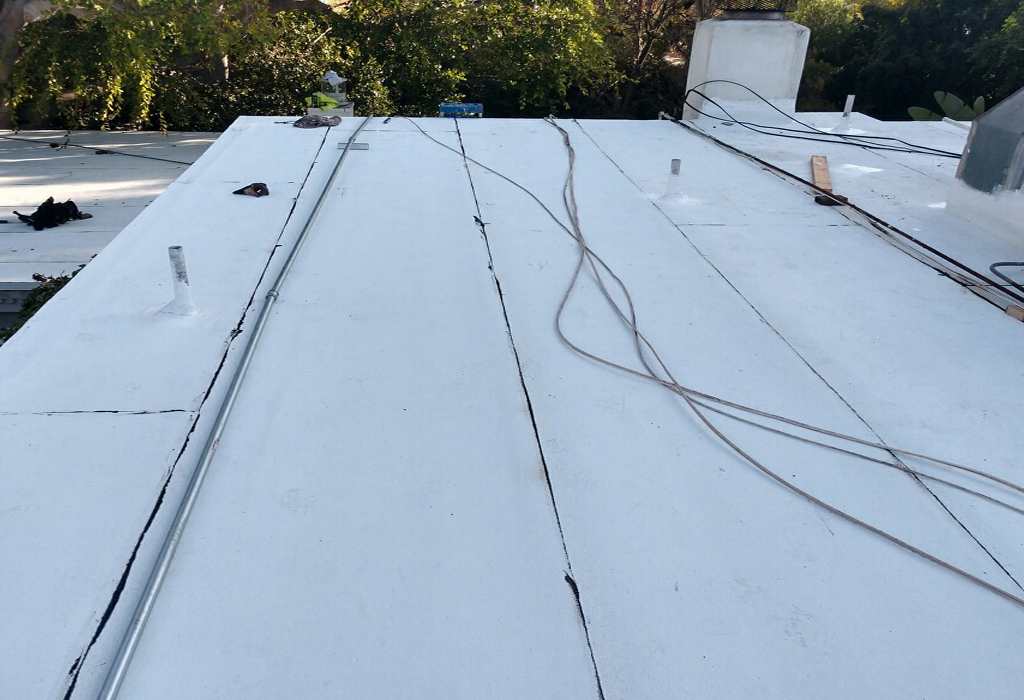
Flat roof leaks can be deceptive. Water may enter through one area and travel beneath the membrane before appearing inside the building.
A complete inspection looks beyond the interior stain and evaluates the surrounding roofing system.
Ponding Water and Drainage Problems
Ponding water is water that remains on the roof after drainage should reasonably have occurred. It may result from blocked drains, clogged scuppers, insufficient slope, compressed insulation, structural movement, or low areas in the roof surface.
Standing water can place additional stress on membranes, seams, coatings, and flashing. It can also collect debris and increase the time that vulnerable areas remain exposed to moisture.
Drains, Scuppers, and Roof Slope
A roof drain carries water through an interior drainage system. A scupper is an opening that allows water to pass through a parapet or roof edge.
Both must remain clear and properly integrated with the roofing system. Drainage problems should be evaluated before a new membrane or coating is installed. Otherwise, the same water patterns may continue after the project is complete.
Open Seams and Membrane Damage
Seams can fail because of age, movement, poor adhesion, installation issues, or physical damage. Small openings may allow water beneath the surface even when the surrounding membrane looks intact.
Membrane punctures can also occur from tools, equipment work, foot traffic, falling objects, or unauthorized rooftop activity.
Parapet and Perimeter Flashing Leaks
Parapets are raised walls around sections of a flat roof. The transitions between the roof membrane, wall surfaces, caps, and edges require careful flashing.
Cracks, separation, loose metal, failed sealants, and deteriorated transitions can allow water into the building envelope. These areas should be inspected together rather than treated as unrelated components.
Roof Penetrations and Rooftop Equipment
A roof penetration is any component that passes through the roofing system, including pipes, vents, skylights, conduits, drains, and equipment supports.
Each penetration creates a transition that must remain watertight. Movement, aging materials, improper repairs, or equipment service can disturb these details.
Cracks, Blisters, and Trapped Moisture
Blisters or bubbles may form when moisture or air becomes trapped beneath part of the roofing system. Cracking may result from age, movement, exposure, or material deterioration.
These symptoms should be evaluated before they are cut, coated, or covered. The visible surface does not always reveal the extent of the underlying issue.
Recurring Leaks After Previous Repairs
A previous repair may fail because the wrong area was treated, the surrounding material was unstable, drainage was not corrected, or moisture had already spread beneath the roof.
Recurring leaks do not automatically mean replacement is required, but they do indicate that a more complete diagnostic approach is needed.
What Happens During a Flat Roof Inspection?
A flat roof inspection should provide more than a quick visual glance. The exact process depends on roof access, safety conditions, weather, property type, and the condition of the surface.
Membrane and Surface Review
We examine accessible roof areas for:
Cracks
Open seams
Punctures
Blisters
Loose material
Coating wear
Surface contamination
Signs of previous repairs
Areas of unusual movement
Flashing and Penetration Review
Flashing is checked around roof edges, parapets, walls, vents, pipes, drains, equipment supports, skylights, and other transitions.
These details often experience movement and may fail before the main roof surface.
Drainage Assessment
The inspection considers water flow, visible low areas, debris accumulation, blocked drainage points, and signs that water has remained on the roof.
A dry day can still reveal drainage concerns through staining, dirt patterns, algae, surface deposits, or deterioration around drains and scuppers.
Moisture and Deck Concerns
Visible softness, deformation, staining, damaged insulation, or movement may indicate moisture beneath the surface. Additional evaluation may be recommended when the roof’s condition cannot be understood through surface inspection alone.
Repair History and Remaining Service Life
Previous patches, coatings, and replacement sections can reveal how the roof has performed over time. We consider whether older work remains stable and whether new repairs can be integrated properly.
Our Flat Roofing Process
Every roof is different, but a clear process helps property owners know what to expect.
Step 1: Property and Roof Assessment
We begin by gathering information about the property, visible symptoms, leak history, previous roof work, and current concerns.
Roof measurements and satellite information may support the early assessment, but physical conditions must still be evaluated before a final recommendation is made.
Step 2: Findings and Available Options
After assessing the roof, we explain the observed conditions and discuss appropriate options.
This may include:
A focused repair
Corrective drainage work
Flashing or penetration repairs
A restoration coating
Partial replacement
Complete replacement
We also identify factors that could change the project scope, such as hidden moisture or damaged decking.
Step 3: Project Planning and Material Selection
The selected approach should fit the roof, property use, access, drainage, and ownership goals.
Planning may include material selection, scheduling, staging, occupant communication, rooftop equipment coordination, and permit considerations.
Step 4: Installation or Repair
The work area is prepared, damaged materials are addressed, and the approved roofing work is completed according to the agreed scope.
Preparation is a critical part of roofing performance. New material should not be installed over loose, wet, contaminated, or unstable surfaces without appropriate corrective work.
Step 5: Final Review and Care Guidance
After the roofing work is completed, the finished areas are reviewed. Property owners should also understand basic maintenance needs, drainage care, roof access practices, and recommended inspection timing.
Should You Repair, Restore, or Replace Your Flat Roof?
The right choice depends on more than the age of the roof. Condition, moisture, drainage, repair history, deck stability, and expected ownership plans all influence the decision.
When Repair May Be Practical
Repair may be suitable when the problem is isolated, the membrane remains stable, and there is no evidence of widespread moisture damage.
A successful repair should integrate with the existing system and address the actual source of water entry.
When Restoration May Be Practical
Restoration may be considered when the roof is broadly weathered but remains structurally serviceable and suitable for a compatible coating system.
The roof must be cleaned, prepared, repaired, and evaluated for moisture before the coating is applied.
When Replacement May Be the Better Choice
Replacement may provide better value when deterioration is widespread, leaks are recurring, moisture has spread beneath the surface, drainage needs major correction, or previous repairs are no longer dependable.
A complete assessment is the best way to compare these paths.
West Hollywood Flat Roofing Considerations
Flat roofing projects in West Hollywood may involve occupied apartments, retail spaces, offices, modern homes, mixed use properties, and buildings with limited access.
The roof design is important, but project planning also affects the customer experience.
Permits and Reroofing Requirements
Permit and energy requirements can depend on the building type, roofing material, existing assembly, project scope, and current city standards.
Some repairs may differ from larger reroofing projects in how they are reviewed. Final requirements should be confirmed for the specific property and scope before work begins.
Cool Roof and Energy Considerations
Reflective roofing materials may be relevant for certain West Hollywood projects. The appropriate system depends on the roof condition, building use, insulation, drainage, product compatibility, and applicable requirements.
A cool roof surface should be treated as one part of the roofing assembly, not as a replacement for proper waterproofing.
Access and Scheduling for Occupied Properties
Occupied properties require careful coordination. Work may need to account for residents, customers, employees, shared entrances, delivery areas, parking, noise, and rooftop equipment access.
Clear communication can help reduce disruption and prevent unexpected conflicts.
Rooftop Equipment and Drainage Planning
HVAC units, service lines, vents, solar equipment, and other rooftop components can affect water flow and maintenance access.
Roofing work should preserve drainage paths and provide durable flashing around equipment supports and penetrations.
Preparing a Flat Roof for Solar
A roof should be evaluated before solar equipment is installed. Important considerations include remaining service life, membrane condition, attachment methods, access paths, drainage, and future maintenance.
Installing solar over a roof that is near replacement can create added cost later if the equipment must be removed and reinstalled.
Relevant Flat Roofing Work and Project Experience
Project examples can help property owners understand how different flat roof conditions are addressed. Useful examples should show the property type, existing problem, selected material, scope of work, and completed result.
You can review our recent roofing projects to see examples of completed work, roofing materials, and project types.
What to Look for in a Flat Roof Project Example
When reviewing a contractor’s work, consider:
Whether the project involved a similar property type
Whether drainage and flashing details are visible
Whether the roofing system is clearly identified
Whether before and after conditions are explained
Whether the project description focuses on the actual roofing problem
Whether the completed work appears clean and organized
A useful project example should provide more than a finished roof photograph. It should help explain why the selected solution was appropriate.
Why Property Owners Choose Smile Roofing
Roofing decisions are easier when the information is clear and the process feels manageable.
Clear Information Without High Pressure Sales
We focus on helping you understand the roof before asking you to make a decision. Our role is to explain the condition, available options, and important project variables.
Residential and Commercial Roofing Experience
Flat roofs appear on homes, apartments, offices, retail properties, mixed use buildings, and other structures. Each property requires a plan that accounts for its use, access, roof details, and occupants.
Convenient Roof Assessment Options
Satellite measurements and property information can help begin the evaluation process. They are useful tools for understanding roof size and layout, although final recommendations must reflect actual conditions.
Transparent Project Recommendations
We explain why a repair, restoration, or replacement is being considered. We also discuss factors that could affect the final scope, including moisture, decking, drainage, access, and existing materials.
Work You Can Review Before Making a Decision
Project examples, material explanations, and a clearly written scope can help you evaluate the recommendation with greater confidence.
Flat Roofing Questions, Answered With a Smile
Can a Leaking Flat Roof Be Repaired Without Replacement?
Often, yes. A repair may be appropriate when the leak comes from a localized seam, penetration, flashing detail, drain, or small damaged membrane area and the surrounding roof remains serviceable.
Replacement may be more practical when leaks are widespread, moisture has spread beneath the surface, or the roof has undergone repeated unsuccessful repairs.
What Causes Ponding Water on a Flat Roof?
Ponding water can result from blocked drains, clogged scuppers, insufficient slope, compressed insulation, structural movement, or low areas in the roof surface.
The cause should be identified before installing a new coating or membrane. Covering the roof without correcting drainage may allow the same water pattern to continue.
Can a Flat Roof Be Coated Instead of Replaced?
Sometimes. A coating may extend the service life of a roof that is securely attached, sufficiently dry, compatible with the coating, and free from major deck or insulation damage.
A coating should not be used to hide widespread moisture, unstable materials, or serious structural deterioration.
How Do I Know When a Flat Roof Needs Replacement?
Replacement may be considered when the roof has recurring leaks, widespread seam failure, extensive cracking, damaged insulation, deck deterioration, severe drainage problems, or repeated repairs that no longer provide dependable results.
An inspection is needed to determine whether the damage is localized or affects the broader roofing system.
What Is the Best Flat Roofing Material for a West Hollywood Property?
There is no single material that is best for every property. TPO, PVC, modified bitumen, and compatible coating systems each have different applications.
The right choice depends on the existing roof, building use, slope, drainage, rooftop equipment, access, budget, energy goals, and expected maintenance.
What Affects the Cost of Flat Roof Repair or Replacement?
Cost can be influenced by:
Roof size
Existing material
Damage extent
Number of roofing layers
Insulation condition
Roof deck repairs
Drainage corrections
Access and staging
Penetrations and rooftop equipment
Selected material
Permit requirements
Disposal and preparation needs
A roof assessment is necessary before a dependable scope and estimate can be prepared.
How Long Does Flat Roof Work Usually Take?
Project length depends on the scope, roof size, access, preparation, hidden conditions, material availability, permits, weather, and occupied property requirements.
A focused repair may require less time than a complete replacement, while projects involving drainage correction, decking, insulation, or multiple rooftop details may take longer.
Can Roof Work Be Completed While Tenants or Businesses Remain Inside?
In many cases, yes. The project should be planned around access, noise, safety, entrances, working hours, rooftop equipment, and the needs of building occupants.
Some conditions may require temporary restrictions in specific areas, but clear scheduling and communication can help reduce disruption.
Does Flat Roof Replacement Require a Permit in West Hollywood?
Permit requirements depend on the property and the scope of work. A repair may be treated differently from a larger reroofing or replacement project.
Requirements should be confirmed for the specific building, material, and project before work begins.
How Often Should a Flat Roof Be Inspected?
Inspection frequency depends on the roof’s age, material, exposure, maintenance history, and condition. It is also helpful to inspect the roof after severe weather, before major rooftop work, when a property changes ownership, or when interior signs of moisture appear.
Regular review can identify small problems before they affect larger areas.
Schedule a Flat Roof Inspection in West Hollywood
A flat roof problem does not become clearer through guesswork. The most useful next step is an assessment that considers the membrane, seams, flashing, penetrations, drainage, repair history, and supporting roof components.
Smile Roofing serves homeowners, landlords, property managers, associations, and commercial property owners throughout West Hollywood. We provide practical recommendations based on the roof’s actual condition, with a focus on clear information and a comfortable decision process.
To discuss a leak, aging membrane, drainage concern, coating project, or complete roof replacement, contact Smile Roofing for a roof inspection or estimate. We will help you understand the available options and choose a path that fits your property.


Contact Form