

Roof Inspection Junction, CA
Call For FREE Inspection
No Pressure & No Obligation
Get A Full Detailed Roofing Report & Quote!
-
Inquiry Form
Call us directly or complete the form to assess your roofing needs
-
Project Quote
Receive a full complimentary detailed report within 48 hours!
-
Smart Assessment
Quick and Free site assessment
-
Smile Roofing Done
From start to finish trust our experts to provide top-quality roofing services
Step 1
Submit Your Info
Help us understand your roofing needs.
Step 2
Sit Back and Smile
We’ll generate your customized roof report within hours. Leave it to us.
Step 3
Your Quote Is Ready
It’s that easy! Your full roof quote delivered within 48 hours.
Step 1
Inquiry Form
Call us directly or complete the form to assess your roofing needs
Step 2
Project Quote
Receive a full complimentary detailed report within 48 hours!
Step 3
Smart Assessment
Quick and Free site assessment
Step 4
Smile Roofing Done
From start to finish trust our experts to provide top-quality roofing services
Our Mission:
Professional Services Always Provided With A Smile
Reliable Roof Inspection Junction, CA
When something about your roof does not look or feel right, the hardest part is often not knowing what the problem actually is.
You may have noticed a stain on the ceiling, a slipped tile, a missing shingle, standing water on a low slope section, or simply signs that the roof is getting older. You may also be planning ahead and want to understand the roof before deciding whether maintenance, repair, or replacement should even be part of the conversation.
At Smile Roofing, our Roof Inspection Junction, CA service is designed to give property owners a clearer understanding of visible roof conditions before bigger decisions are made.
A professional roof inspection is not about assuming the worst. It is about looking carefully at the accessible parts of the roofing system, identifying visible signs of wear or damage, explaining what those findings may mean, and determining whether the roof should be monitored, maintained, repaired, investigated further, or considered for replacement planning.
We believe homeowners should understand the roof before being told what to do about it.
Know What Is Happening With Your Roof Before Deciding What Comes Next
Roof problems are not always obvious from the ground.
A roof may look generally intact while a flashing detail, damaged tile, worn membrane area, drainage issue, or exposed roofing component is creating a concern. In other situations, something that looks serious may turn out to be relatively localized.
That is why inspection matters.
A professional roof inspection gives us an opportunity to look at visible roofing conditions in context. Rather than focusing on one symptom alone, we can consider how different roof components work together and where potential problems may be developing.
The purpose is to create a clearer picture of the roof’s current condition.
A Roof Inspection Gives You More Than a Quick Look
A roof inspection should be more than someone standing at the property and glancing upward.
A useful inspection focuses on relevant roofing materials, vulnerable transitions, drainage areas, penetrations, flashing details, and visible signs of deterioration or water related concerns.
Depending on the roof type, accessibility, and property conditions, that may involve reviewing:
Roofing materials and visible surface condition.
Flashing around walls, edges, vents, skylights, and other penetrations.
Valleys, ridges, transitions, and roof intersections.
Flat or low slope membrane areas.
Drainage paths, roof drains, scuppers, or related areas where applicable.
Signs of missing, displaced, cracked, worn, or deteriorated materials.
Visible evidence that may point toward moisture intrusion.
Areas where previous repairs may require closer attention.
The exact inspection scope depends on the property. Not every roof has the same materials, details, or accessible areas.
What Does a Professional Roof Inspection Include?
A professional roof inspection is a physical review of accessible and visible roof components to identify signs of damage, deterioration, installation concerns, drainage problems, or other conditions that may need attention.
It is different from a satellite measurement report because the primary purpose is not simply to understand roof dimensions. The purpose is to evaluate the visible physical condition of the roofing system.
Roofing Materials and Surface Condition
The roof covering is one of the first areas to consider because it acts as the main weather resistant surface.
What we look for depends on the roofing material.
On a shingle roof, visible concerns may include missing shingles, lifting edges, damaged sections, surface wear, or granule loss.
On a tile roof, the inspection may involve checking for cracked, slipped, displaced, or broken tiles where those conditions are visible.
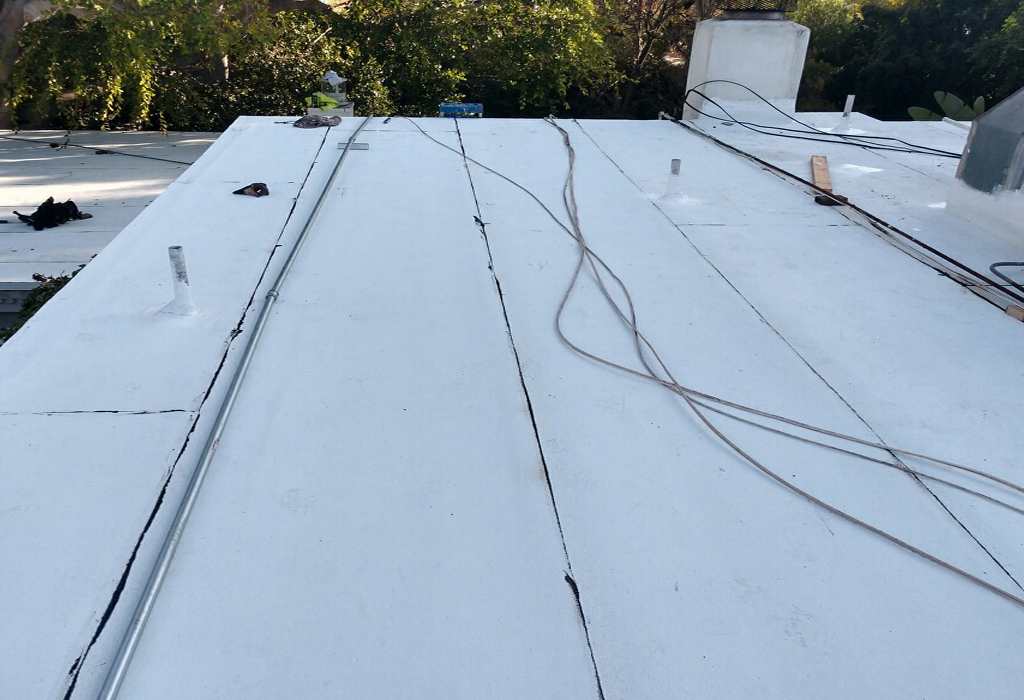
On flat and low slope roofs, attention may be given to the membrane surface, seams, transitions, penetrations, and areas where water may collect.
The important point is that different roofing systems age and fail in different ways. A useful inspection should take the specific roof type into account.
Flashing, Roof Penetrations, and Transitions
Flashing is used at many of the areas where the roof changes direction or meets another building component.
These details are especially important because water often finds its way into a roofing system through transitions rather than through the middle of an otherwise intact roof surface.
Inspection may include visible flashing around:
Roof to wall transitions.
Pipe penetrations.
Vents.
Skylights.
Chimneys where present.
Roof edges and terminations.
Other penetrations or intersections.
We may also look for visible deterioration, gaps, displacement, exposed sealant concerns, or previous repair areas that deserve closer evaluation.
Valleys, Edges, and Drainage Areas
Water movement matters on every roof.
Sloped roofing systems rely on valleys, edges, gutters, and related drainage paths to move water away efficiently. Flat and low slope roofs may depend on drains, scuppers, internal drainage, tapered design, or other systems.
Visible concerns may include debris buildup, damaged drainage areas, ponding water, compromised edges, or conditions that appear to interfere with proper water flow.
Why Small Roofing Details Can Matter
A roofing issue does not have to cover a large area to become important.
A small flashing gap, cracked tile near a vulnerable transition, open membrane seam, or drainage problem may affect only one part of the roof while still allowing moisture to travel into areas below.
At the same time, a localized problem does not automatically mean the entire roof requires replacement.
That is why identifying where the concern appears to be and understanding the surrounding roof condition is more useful than making assumptions based on one visible symptom.
When Should You Schedule a Roof Inspection in Junction?
There is no single situation that tells every homeowner when an inspection is necessary.
In many cases, people schedule an inspection because something has changed or because they want more information before making a decision.
You Notice a Leak or Ceiling Stain
A ceiling stain, water mark, or visible moisture can be a reason to inspect the roof, but it does not automatically identify the exact source.
Water can move along framing, decking, underlayment, or other building components before it becomes visible inside.
A roof inspection can help identify visible exterior conditions that may be related to the moisture concern and determine whether additional investigation is needed.
Roofing Materials Look Damaged or Out of Place
Missing shingles, cracked tiles, lifted materials, damaged edges, exposed areas, or visibly worn roofing surfaces are all reasons to take a closer look.
Some visible defects are localized. Others may be part of broader material aging or deterioration.
An inspection helps put the visible problem into context.
Your Roof Is Aging and You Want a Condition Check
A roof does not need to be actively leaking before an inspection becomes useful.
If the roof has been in place for many years or you are unsure about its maintenance history, a condition check can help identify visible areas that may deserve attention.
That does not mean an older roof automatically needs replacement. Age is one factor. Actual condition matters too.
You Are Planning Repairs or Replacement
Before deciding how much roofing work is appropriate, it helps to understand what is actually happening on the roof.
An inspection can help determine whether the visible concern appears isolated, whether several areas need attention, or whether the broader roofing system may need more extensive planning.
If the findings point toward repair or replacement needs, Smile Roofing can also help property owners explore the appropriate roofing services based on the condition and scope involved.
You Are Making a Property Decision
A roof inspection can also be useful when a property owner, buyer, seller, landlord, or manager wants additional information about roof condition.
The inspection should not be confused with every other type of property or real estate inspection. Its focus is specifically on accessible and visible roofing conditions.
For someone making a larger property decision, that roofing information can provide valuable context.
Can a Roof Inspection Find the Source of a Leak?
A roof inspection can often help identify visible conditions and likely problem areas associated with a leak, but not every leak source can be confirmed during a single visual inspection.
Leaks can be straightforward or complicated.
A damaged flashing detail may clearly correspond with moisture below. In other cases, water can travel from the original entry point before becoming visible inside the building.
What Visible Evidence Can Tell Us
During a roof inspection, we may look for conditions such as:
Damaged or displaced roofing materials.
Open or deteriorated flashing details.
Problems around penetrations.
Cracked or broken tile.
Worn membrane areas.
Open seams or transitions.
Drainage problems.
Visible moisture related staining or deterioration where accessible.
These observations can help narrow the likely area of concern.
When Further Investigation May Be Needed
Some roofing and moisture problems are concealed.
Decking, insulation, framing, underlayment, and other components may not be fully visible during a standard exterior inspection.
If the visible evidence does not clearly establish the source or extent of a problem, further investigation may be recommended.
We prefer to be clear about those limits rather than pretend every roofing concern can be diagnosed from one viewpoint.
Roof Inspection for Different Roofing Systems
Different roofing materials require different inspection priorities.
The basic goal remains the same: understand visible condition, identify concerns, and determine what kind of next step makes sense.
Shingle Roof Inspections
Shingle roofs may show wear in several ways.
Visible inspection points can include missing or lifted shingles, damaged tabs, worn surfaces, granule loss, flashing details, roof penetrations, and other areas where the roofing system appears compromised.
Not every sign of wear has the same meaning.
A few damaged shingles may be very different from widespread deterioration across multiple roof planes. That difference is one reason physical inspection is valuable.
Tile Roof Inspections
Tile roofing can remain durable for many years, but individual tiles may crack, break, slip, or become displaced.
Inspection may focus on visible tile condition, transitions, flashing, valleys, and areas where tiles are damaged or no longer sitting properly.
A broken tile does not automatically reveal the condition of the materials underneath it. If underlayment or concealed conditions are a concern, additional evaluation may be necessary.
Flat and Low Slope Roof Inspections
Flat and low slope roofing systems depend heavily on membrane condition and drainage.
Inspection may include visible review of:
Membrane surfaces.
Seams.
Penetrations.
Flashing and terminations.
Drainage paths.
Ponding water.
Surface deterioration.
Previous patch or repair areas.
Because these systems manage water differently from steep slope roofs, drainage performance and membrane continuity deserve particular attention.
Commercial Roof Inspection Considerations
Commercial roofs may involve larger surface areas, multiple penetrations, equipment curbs, drainage systems, and roofing assemblies that differ from typical residential systems.
The inspection should take those conditions into account while remaining focused on what is visible and accessible.
For property owners and managers, periodic inspection can also support maintenance planning and help identify visible concerns before larger decisions are made.
Roof Inspection Versus Satellite Roofing Report
Roof inspections and satellite roofing reports answer different questions.
A roof inspection focuses on visible physical condition.
A satellite roofing report focuses primarily on roof measurement, geometry, and planning information gathered from available aerial or satellite imagery.
| Question | Roof Inspection | Satellite Roofing Report |
|---|---|---|
| Evaluates visible physical roof condition | Yes | No |
| Measures roof dimensions | Can support measurement | Yes |
| Identifies visible roofing damage | Yes | Limited |
| Helps investigate leaks | Yes, where evidence is accessible | No |
| Reviews roof geometry | Yes | Yes |
| Can support project estimating | Yes | Yes |
| Requires physical access | Usually | No for initial measurement |
Why the Two Services Can Work Together
There are situations where both types of information are useful.
Satellite reporting may help establish roof size, layout, pitch related information, and overall geometry before a project is fully scoped.
A physical roof inspection can then provide information about visible condition, wear, damage, drainage, flashing, and other concerns that imagery cannot reliably diagnose.
The services complement each other because they answer different parts of the roofing question.
One helps explain what the roof measures.
The other helps explain what the roof looks like physically and what may need attention.
What Happens After a Roof Inspection?
The next step should depend on what the inspection actually shows.
There is no responsible reason to assume every roof needs the same solution.
The Roof May Only Need Monitoring
Some visible conditions may not require immediate repair.
If an area appears stable but deserves attention over time, monitoring may be a reasonable recommendation.
The important thing is understanding what to watch and why.
Maintenance or a Localized Repair May Be Enough
A roof problem may sometimes be limited to one area.
Depending on the condition, maintenance or a localized repair may address the concern without requiring broader replacement.
That decision should be based on the actual condition of the affected area and the surrounding roofing system.
Further Evaluation May Be Recommended
If an inspection reveals signs that suggest concealed moisture, decking concerns, structural involvement, or another condition that cannot be fully evaluated from the visible roof surface, further investigation may be appropriate.
That does not mean the problem is automatically severe.
It means the limits of the initial inspection have been reached and more information is needed.
Replacement Planning May Make Sense for Some Roofs
There are also situations where visible deterioration is more widespread or where multiple roof components show significant aging.
In those cases, replacement planning may become part of the conversation.
Replacement should be based on condition, scope, and practical roofing considerations rather than being treated as the automatic outcome of every inspection.
Why Smile Roofing Focuses on Clarity Before Commitment
Roofing decisions are easier when the homeowner understands what is being recommended and why.
That is why our inspection approach is centered on explanation rather than pressure.
We Explain What We See
If we identify visible wear, damaged material, flashing concerns, drainage issues, or other roofing conditions, we want the property owner to understand what those observations mean.
Roofing terminology should not become a barrier between the inspection and the decision.
We aim to explain findings in practical terms.
We Do Not Assume Every Inspection Means Replacement
A roof inspection can lead to several different outcomes.
Sometimes the roof needs monitoring.
Sometimes a maintenance item deserves attention.
Sometimes a repair is appropriate.
Sometimes more investigation is needed.
Sometimes replacement planning makes sense.
The inspection should help narrow those possibilities rather than forcing the homeowner toward the largest project.
Roofing Experience Beyond the Inspection
Smile Roofing’s work goes beyond evaluating roofs.
Our experience with different roofing systems, materials, repairs, replacements, and project conditions gives us practical context when reviewing inspection findings. Property owners who want to understand the broader scope of our work can view our recent roofing projects and see examples of completed roofing work across Southern California.
That broader experience helps us connect visible roof conditions with realistic roofing options.
What Property Owners Commonly Ask About Roof Inspections
Is a roof inspection necessary if I do not see a leak?
Not always, but a roof inspection can still be useful when you want to understand the condition of an aging roof, check visible wear, review roofing materials after a concern, or plan future maintenance.
A roof can have visible deterioration before an interior leak becomes obvious.
Can roof damage be repaired instead of replaced?
Yes, some roof damage can be repaired.
Whether repair is appropriate depends on the location and extent of the damage, the condition of the surrounding roofing system, the roof type, and other factors found during evaluation.
An inspection helps provide the information needed to make that distinction.
Does a roof inspection include flashing?
Visible flashing is an important part of many roof inspections because transitions and penetrations can be vulnerable to water intrusion.
Accessibility and roof design affect what can be evaluated.
Are gutters and drainage checked?
Drainage related areas may be reviewed when they are relevant, visible, and accessible.
On flat or low slope roofs, ponding water, drains, scuppers, and water flow paths can be especially important. On sloped roofs, valleys, edges, and gutter areas may also provide useful information.
Can flat roofs be inspected?
Yes.
Flat and low slope roofs can be inspected for visible membrane condition, seams, penetrations, flashing, drainage concerns, ponding water, and other accessible conditions.
Can tile roofs be inspected?
Yes.
A tile roof inspection may include visible review for cracked, broken, displaced, or slipped tiles as well as flashing, valleys, transitions, and other accessible details.
Can a roof inspection identify hidden damage?
A standard visual roof inspection cannot guarantee detection of every concealed condition.
It may reveal visible evidence that suggests deeper damage, but decking, concealed moisture, underlayment, insulation, or structural issues may require additional investigation.
What happens if damage is found?
The next step depends on what is found.
Possible outcomes include monitoring, maintenance, localized repair, further investigation, or replacement planning.
Finding damage does not automatically mean the entire roof must be replaced.
Is a roof inspection useful before buying or selling a property?
It can be.
A roof focused inspection may provide useful information about visible roofing condition when someone is making a property decision.
It should be understood as a roofing evaluation rather than a substitute for every other inspection or due diligence process involved in a real estate transaction.
What is the difference between a roof inspection and a roofing estimate?
A roof inspection focuses on understanding the visible condition of the roof.
A roofing estimate focuses on the anticipated scope and cost of specific work.
An inspection may help determine whether an estimate for repair, maintenance, or replacement is appropriate.
Does Smile Roofing offer free roof inspections?
Smile Roofing promotes a free inspection service as part of our roofing process.
The purpose is to help property owners understand the roof and determine what type of next step may be appropriate without treating the inspection as an automatic replacement sale.
Will I be pressured to replace my roof after the inspection?
Our goal is to explain what we see and help you understand your options.
If the roof appears to need monitoring, maintenance, repair, more investigation, or replacement planning, that recommendation should reflect the actual condition observed.
An inspection should give you information you can use, not make the decision for you.
Start With a Clearer Understanding of Your Roof
If you have noticed a roof problem, are concerned about an aging roofing system, or simply want more information before making a decision, a professional roof inspection can help bring the situation into focus.
At Smile Roofing, we look at the visible and accessible condition of the roof, explain what we find in practical language, and help you understand whether the next step appears to be monitoring, maintenance, repair, further investigation, or replacement planning.
The purpose is clarity first.
If you are looking for a Roof Inspection in Junction, CA and want to discuss what you have noticed at the property, you can contact Smile Roofing to begin the conversation.



Contact Form