

- By Smile Roofing
- Roofing Tips
- 0 Comment
A roof leak rarely tells the whole story from the first stain on the ceiling. The visible drip may look small, but the final repair total depends on the roof system above it, the path water traveled, the materials involved, and whether moisture has reached hidden areas below the surface. Two homes can have similar ceiling stains and need very different repair scopes because one leak may come from a cracked pipe boot while another may involve flashing, underlayment, decking, or multiple roof planes.
Roof leak repair prices are best understood as a result of diagnosis, not guesswork. A responsible estimate should identify where the water is entering, what roof components are affected, what materials must be removed or replaced, and what conditions could change once the damaged area is opened. That is why a no-pressure roof inspection is often the safest starting point before assuming a leak is simple or severe.
The goal is not to make every leak sound complicated. Many leaks are localized and repairable. The important point is that the right repair price should reflect the actual water path and the condition of the surrounding roof, not just the size of the stain indoors.
Roof Leak Repair Prices Depend on Scope Before Anything Else
The biggest reason roof leak repair pricing varies is that “roof leak” can describe many different problems. Some repairs involve one small component. Others require careful removal of roofing material, flashing replacement, underlayment repair, or sheathing replacement. The more layers involved, the more the total is shaped by labor, access, materials, and risk.
Minor Leak Repairs With a Clearly Identified Entry Point
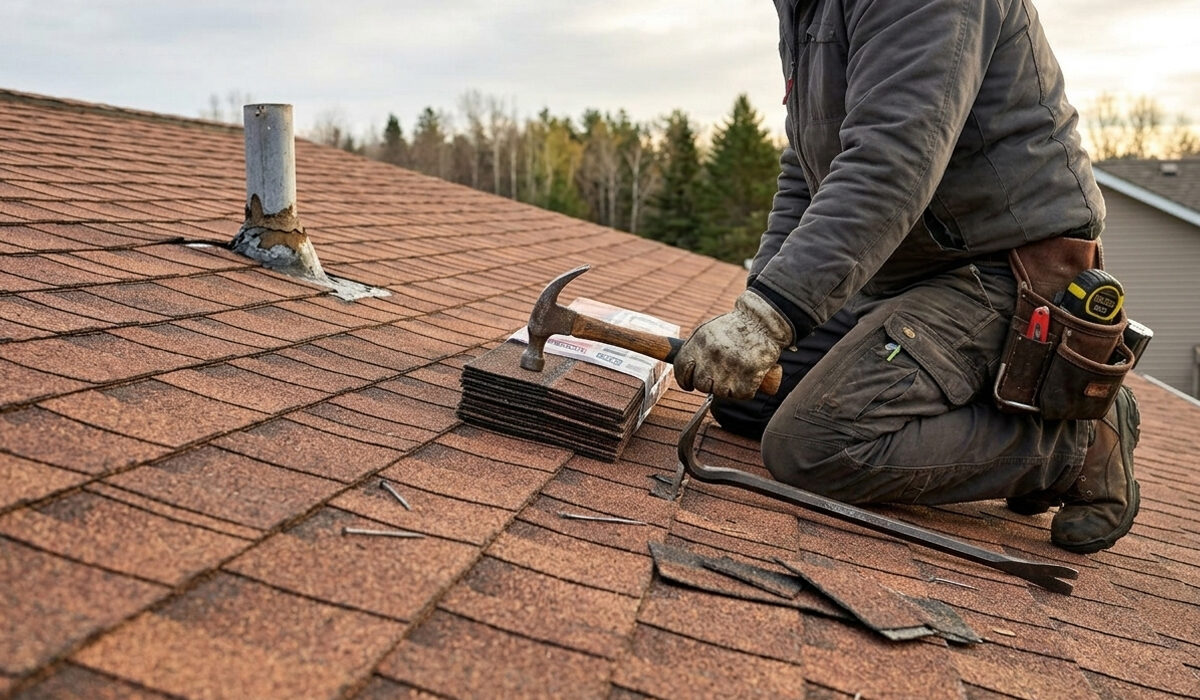
A minor roof leak is usually tied to a single, visible source. Common examples include a cracked pipe boot, a lifted shingle tab, an exposed fastener, a small puncture, or a localized sealant failure around a roof penetration. These issues can often be evaluated with less tear-off because the failed component is easier to isolate.
Even with a small leak, the repair should still be handled carefully. A fast surface patch may stop visible water for a while, but it may not correct the actual weakness in the roof assembly. For example, sealing around a failed pipe boot without replacing the deteriorated boot may leave the same area vulnerable during future rain.
Minor repairs tend to stay more controlled when the surrounding material is sound, the roof is accessible, and the water has not soaked the decking below. The most important question is not whether the leak looks small indoors. It is whether the source is confirmed and the surrounding roof components are still performing properly.
Moderate Leak Repairs Around Flashing, Valleys, and Transitions
Moderate leak repairs usually involve areas where water management depends on more than the roof covering alone. Chimneys, skylights, valleys, dormers, sidewalls, vents, and roof-to-wall transitions are common examples. These areas depend on flashing, underlayment, sealants, fasteners, and correct material layering.
When flashing is involved, the repair can become more detailed because water may be entering through a small opening but spreading across several layers. A chimney leak, for instance, may require work around step flashing, counterflashing, masonry joints, and nearby roofing material. A skylight leak may come from the flashing system, the curb, the roof material around it, or the skylight unit itself.
These repairs should not be priced like simple surface patches. The total depends on how much material must be lifted, whether flashing can be repaired or must be replaced, and whether the surrounding roof is still in good enough condition to reconnect properly.
Extensive Leak Repairs With Hidden Moisture or Damaged Decking
A more extensive repair may be needed when water has moved below the surface and affected the roof deck, fascia, soffit, insulation, or ceiling materials. In these cases, the roof leak repair price is influenced by what is discovered after the damaged roof section is opened.
Decking damage is one of the biggest scope changers. Soft, stained, swollen, or rotted sheathing cannot always be confirmed from the outside. A contractor may identify warning signs during inspection, but the full condition may only become clear once shingles, tiles, or membrane materials are removed.
Interior damage can also affect the homeowner’s total out-of-pocket cost, even when it is not part of the roofing invoice. Drywall repair, paint, insulation replacement, mold evaluation, and electrical fixture checks may involve separate trades. A clear roof estimate should explain what is included and what is outside the roofing scope.
Roof Material Changes How Leak Repairs Are Diagnosed and Completed
Roof material has a major effect on repair approach. Asphalt shingles, flat roofing systems, and tile roofs manage water differently, so the repair process cannot be treated the same. The material affects labor, removal, replacement, matching, access, and the chance of discovering hidden damage.
Asphalt Shingle Roof Leaks Are Often Easier to Access
Asphalt shingles are common because they are practical, familiar to many roofers, and generally easier to remove and replace than heavier or more specialized materials. When a leak is isolated, the repair may involve lifting a controlled section, replacing damaged shingles, correcting flashing, and sealing the system according to the roof’s design.
The age of the roof still matters. Older shingles can become brittle, which means they may crack during removal. Weathered shingles may not match new replacement shingles, even when the product line is similar. If the leak is part of a larger pattern of wear, homeowners may need to compare repair work with an asphalt shingle roof replacement service to understand which option better supports the roof’s remaining service life.
Shingle Matching Can Affect the Visible Result
A repair can be technically sound and still look different from the surrounding roof. Sun exposure, granule wear, discontinued colors, and older product lines can make exact matching difficult. This does not always mean replacement is required, but it should be discussed before work begins so expectations are realistic.
Flat Roof Leaks Need Careful Moisture Tracing
Flat and low-slope roofs can be more difficult to diagnose because water does not always enter the ceiling directly below the roof opening. It may travel under a membrane, move along insulation, follow a seam, or collect around drains, scuppers, parapet walls, or ponding areas.
Common flat roof leak sources include open seams, cracked coatings, punctures, failed flashing, drain issues, and areas where standing water accelerates wear. A repair that only covers the visible surface may fail if the real issue is trapped moisture, poor drainage, or membrane separation.
When a flat roof has repeated leaks, widespread surface deterioration, or drainage problems, the conversation may shift from patching to flat roof replacement work. That decision should be based on roof condition, leak history, material performance, and whether a localized repair can be tied into the existing system reliably.
Ponding Water Can Turn a Small Weakness Into a Repeated Leak
Low-slope roofs are designed to move water, even when they appear flat. When water sits too long, small membrane weaknesses can become more active. Repair planning should consider the leak source and the reason water is collecting in the first place.
Tile Roof Leak Costs Often Come From What Is Beneath the Tile
Tile roofs are often misunderstood because the visible tile is not always the main waterproofing layer. Clay and concrete tiles shed water, but the underlayment beneath them plays a major role in leak protection. A tile roof leak may require removing tiles carefully, inspecting the underlayment, repairing or replacing damaged sections, and resetting the tiles without creating new breakage.
The labor involved can be more delicate than other materials. Tiles can crack when walked on improperly, older profiles may be harder to match, and the repair may require careful staging to protect the surrounding roof. A leak in a tile roof should be assessed as a system, not just as a broken surface piece. For that reason, a tile roof service is more appropriate than treating tile leaks as generic patch jobs.
Leak Location Strongly Shapes the Final Repair Scope
Where the leak occurs often matters as much as what material is on the roof. Certain areas handle more water, involve more detail work, or contain transitions where multiple materials meet. These locations can drive the final repair total because they require more careful diagnosis and reconstruction.
Pipe Boots and Vent Openings Usually Have Focused Repair Areas
Plumbing vents and pipe boots are common leak sources because rubber components can crack from sun exposure and age. Fasteners, collars, and sealants can also fail over time. When the surrounding roof is sound, these repairs are often more focused because the leak source is visible and the affected area may be limited.
Still, the repair should not ignore surrounding conditions. If water has been entering around the pipe for a long period, the decking around the penetration may need inspection. A clean repair should restore the waterproofing detail, not simply add sealant around an aging component.
Chimney Flashing Leaks Need Layered Waterproofing
A chimney is one of the more complex roof leak areas because it interrupts the roof surface and requires several waterproofing elements to work together. Step flashing, counterflashing, masonry joints, roof slope, and sometimes a cricket all influence performance.
A common mistake is treating chimney leaks as caulking problems. Sealant can be part of a detail, but it should not be the entire repair strategy when flashing has failed. A durable chimney leak repair may require removing nearby roofing, correcting flashing layers, and addressing masonry-related water entry if present.
Roof Valleys Carry Heavy Water Flow
Valleys collect water from two roof planes, which makes them high-risk leak areas. When debris gathers in a valley, water can slow down, back up, or move under roofing materials. If the underlayment or valley flashing is worn, the leak may affect a larger section than expected.
Valley repairs can require more tear-off because the roofer must restore the water channel, not just cover the stain. Proper repair may involve removing surrounding roofing material, replacing underlayment, correcting flashing, and reinstalling the roof surface so water flows as intended.
Skylight Leaks Require Careful Source Separation
Water near a skylight does not always mean the skylight itself has failed. The leak may come from the flashing, the curb, nearby roofing material, condensation, cracked glazing, or installation details. Pricing depends on which part is actually responsible.
A careful inspection should separate roofing failure from unit failure. Repairing roof flashing will not solve a cracked skylight lens, and replacing a skylight may not fix poor roof-to-curb waterproofing. The repair scope should match the confirmed source.
Roof Leak Repair Cost Drivers by Symptom and Scope
| Interior or Exterior Sign | Likely Area to Investigate | Repair Scope Consideration | Why the Total Can Change |
|---|---|---|---|
| Small ceiling stain after rain | Pipe boot, nail pop, lifted shingle | Isolated repair if decking is dry | Source may be simple, but moisture history matters |
| Stain near fireplace | Chimney flashing or masonry | Flashing correction and nearby material removal | Multiple waterproofing layers may be involved |
| Water below a roof valley | Valley underlayment or flashing | Open valley and restore drainage path | Valleys carry heavy water and may need wider repair |
| Leak below flat roof area | Membrane seam, drain, scupper, ponding | Moisture tracing before repair scope | Water may travel before appearing indoors |
| Stain near skylight | Flashing, curb, skylight unit, nearby roofing | Source separation before repair | The roof or skylight may be responsible |
| Soft ceiling or spreading stain | Decking, insulation, or interior saturation | Exterior repair plus possible interior work | Hidden damage may expand the project |
Labor Conditions Can Make Similar Leaks Price Differently
Even when the leak source is similar, the home itself can affect the work required. Roof pitch, height, access, safety setup, and site conditions all influence labor. A repair that is simple on a low, walkable roof may be more involved on a steep, multi-story, or tightly accessed property.
Roof Pitch Affects Safety and Work Speed
Steeper roofs require more safety preparation and slower movement. Workers may need additional fall protection, roof jacks, staging, or careful material handling. This does not necessarily mean the leak is more severe, but it can mean the same repair takes more setup and attention.
Pitch also affects how water moves. A steep roof may shed water quickly, while a low-slope area may hold water longer around penetrations or transitions. The repair plan should match both the leak source and the roof geometry.
Multi-Story Homes Add Access and Handling Challenges
Height changes how materials, tools, and workers move around a repair area. Ladder placement, staging, driveway access, landscaping, and safe disposal all matter. On some properties, a small roof repair may require extra coordination simply because the leak area is difficult to reach.
Local building styles and property conditions can also affect the inspection process. Homes with narrow side yards, hillside access, additions, or multiple roof levels benefit from roofing support that understands repair conditions beyond the visible leak. When the property has several possible access or roof layout challenges, roof repair, installation, and inspection support can help connect the repair scope to the way the roof is actually built.
Emergency Leak Control Is Different From Permanent Repair
During active rain, stopping water intrusion may require temporary protection such as tarping or sealing a vulnerable area until permanent work can be performed under safer and more suitable conditions. Temporary leak control is useful when water is entering the home, but it should not be confused with a complete repair.
A permanent repair should still identify the source, correct the failed detail, and verify surrounding conditions. Emergency work may reduce immediate damage, while the final repair restores the roof system.
Accurate Inspection Helps Prevent Paying for the Wrong Repair
A roof leak repair price is only useful if the diagnosis is correct. Water can enter at one point, travel along framing or underlayment, and appear indoors somewhere else. Guessing based on the ceiling stain alone can lead to repeated repairs and unnecessary cost.
Water Movement Can Mislead Homeowners
Water follows gravity, but it also follows surfaces. It may run along rafters, drip from deck seams, move through insulation, or collect above drywall before showing as a stain. In some cases, the visible ceiling mark appears several feet away from the roof opening.
This is why a responsible repair process looks both outside and inside when possible. Attic access, moisture signs, roof surface conditions, flashing details, and surrounding material age all help narrow the source.
Measurements and Documentation Support a Clearer Scope
Accurate roof measurements and visual documentation help define what area is being discussed. They also make the estimate easier to understand because the homeowner can see whether the repair is localized or part of a larger roof section.
For planning and measurement clarity, contractors may use detailed roof measurements from satellite imagery alongside on-site inspection findings. Satellite data can support roof layout review and measurement accuracy, while the physical inspection confirms real material condition, leak evidence, and repair needs.
Written Estimates Should Explain the Work, Not Just the Number
A strong leak repair estimate should do more than present a total. It should explain the suspected or confirmed leak source, the repair area, the material being used, whether flashing or underlayment is included, what happens if damaged decking is found, and what is excluded.
Homeowners should look for a clear roofing estimate with no hidden fees so they can compare repair scopes fairly. A lower number may not be a better value if it leaves out flashing replacement, underlayment repair, cleanup, or contingency language for hidden damage.
Scope Clarity Protects Both the Homeowner and the Contractor
When the estimate is specific, everyone understands what the repair is intended to solve. Clear scope language reduces confusion if hidden damage appears, if interior restoration is needed, or if the roof condition suggests a broader concern than the original leak.
Hidden Damage Is the Cost Factor Homeowners Often Discover Late
Some roof leaks are straightforward from the beginning. Others reveal additional damage only after materials are removed. Hidden damage is not a sales tactic when properly documented. It is a real possibility because roof layers can conceal moisture until the repair area is opened.
Decking Damage Changes the Repair From Surface Work to Substrate Work
The roof deck is the structural surface beneath the roofing material. If water has softened or rotted that layer, new roofing materials cannot be properly installed over it. Damaged decking may need to be cut out and replaced before the visible roof covering is repaired.
Signs that decking may be affected include soft spots, sagging areas, repeated leaks, dark staining in the attic, or long-term moisture around penetrations. The estimate should explain how decking will be handled if damage is discovered.
Old Patches Can Hide the Real Leak Path
Previous repairs can complicate diagnosis. Layers of sealant, mismatched materials, patched flashing, or older roof coatings may cover symptoms without correcting the original water path. In these cases, the new repair may require removing failed patch materials before the actual issue can be addressed.
A roof that has been repeatedly patched in the same area deserves a closer look. The recurring leak may point to a deeper problem with slope, flashing, underlayment, drainage, or material age.
Interior Repairs May Be Outside the Roofing Scope
A roof repair stops the water at the exterior source. It may not include restoring ceiling drywall, paint, insulation, flooring, cabinets, or electrical fixtures affected by the leak. Those items should be discussed separately so the homeowner understands the full recovery process.
This distinction matters because a roof estimate and an interior restoration estimate may come from different professionals. Asking what is included prevents confusion after the roof has been repaired.
Repair or Replacement Depends on Roof Condition, Not Fear
A roof leak does not automatically mean the entire roof needs replacement. Many leaks are isolated and can be repaired when the surrounding roof is healthy. At the same time, repeated leaks or widespread material failure may make another patch less practical.
Isolated Leaks Often Support Targeted Repair
A targeted repair may make sense when the leak source is clear, the surrounding roof material is sound, and the roof has useful life remaining. Examples include a damaged vent boot, a small flashing issue, or a limited area affected by wind or debris.
The key is confidence in the surrounding system. If the rest of the roof is stable, a focused repair can restore performance without unnecessary disruption.
Repeated Leaks Suggest a Larger Roof System Problem
Multiple stains, recurring leaks after repairs, widespread cracking, slipping tiles, granule loss, membrane deterioration, ponding water, or brittle shingles may suggest the roof system is failing more broadly. In those cases, repair pricing should be evaluated against the likelihood of continued leak risk.
A repair that solves one leak but leaves several weak areas nearby may not be the best long-term decision. The more often leaks return, the more important it becomes to assess the entire roof condition.
Material Age and Availability Influence the Better Choice
Older roofs create practical challenges. Replacement shingles may not match. Tile profiles may be difficult to source. Flat roof membranes may not tie in cleanly if the existing system is too worn. These details do not automatically require replacement, but they affect how reliable and visually consistent a repair can be.
A practical decision process includes:
Confirm the leak source through inspection.
Evaluate the condition of nearby roof materials.
Check whether the repair can tie into the existing roof reliably.
Consider whether similar leak-prone areas are developing.
Choose the option that restores water control with the least unnecessary risk.
Insurance, Documentation, and Maintenance Affect the Larger Financial Picture
Roof leak repair pricing is only one part of the homeowner’s overall cost. Insurance questions, documentation, and maintenance history can affect what happens after the leak is found. While coverage depends on the policy and the cause of damage, good records make the process easier to understand.
Sudden Damage and Long-Term Wear Are Different Conversations
A leak caused by sudden storm damage, impact, or a specific event may be reviewed differently than a leak caused by aging, deterioration, or deferred maintenance. No contractor should guarantee insurance coverage, but inspection documentation can help homeowners communicate clearly with their carrier.
The safest approach is to record when the leak appeared, what weather conditions occurred, what damage is visible, and what the inspection found. Photos and written repair notes are useful even when insurance is not involved.
Maintenance Helps Control Future Leak Repair Costs
Preventive maintenance reduces the conditions that allow small weaknesses to become larger repairs. Useful maintenance steps include clearing debris from valleys, keeping gutters flowing, checking roof drains and scuppers, watching for cracked tiles, looking for lifted shingles, and inspecting flashing after heavy wind or rain.
Maintenance cannot prevent every leak, but it can reduce avoidable damage. A roof that is inspected and maintained gives the homeowner better information, which leads to better repair decisions when a leak appears.
Questions That Make Roof Leak Repair Prices Easier to Trust
A clear repair conversation helps homeowners avoid vague patchwork and misunderstood estimates. Before approving a roof leak repair, the most useful questions focus on diagnosis, scope, materials, exclusions, and warranty.
Scope Questions Before Approving the Work
Ask these questions before choosing a repair:
What roof component appears to be leaking?
Is the repair addressing the surface material, flashing, underlayment, or all of them?
How large is the repair area?
Will damaged decking be replaced if discovered?
Are before-and-after photos included?
Does the estimate include cleanup and disposal?
What is excluded from the roofing scope?
Is interior damage included or separate?
What warranty applies to the repaired area?
Is the repair compatible with the roof’s current age and condition?
Estimate Red Flags That Can Lead to Repeat Leaks
A vague estimate may be a warning sign. Phrases such as “seal leak area” or “patch roof” are not always wrong, but they should be supported by a clear explanation of the leak source and repair method. Be cautious when an estimate does not mention flashing, underlayment, material type, access, decking, cleanup, or warranty.
The best roof leak repair price is attached to a repair that can be explained clearly. Homeowners should understand what failed, what will be corrected, and what conditions could change the scope once work begins.
Durable Roof Leak Repair Starts With Fixing the Water Path
Roof leak repair prices are driven by the full path water takes through the roof system. Material type, leak location, roof pitch, access, flashing condition, underlayment, decking, hidden moisture, and repair history all influence the final scope. A small stain may have a simple source, while a larger repair may begin with symptoms that looked minor at first.
The most reliable repair approach is systematic. Find the entry point, evaluate nearby materials, document the condition, explain the repair scope, and address the part of the roof system that failed. A roof is designed to move water away from the home. A leak repair should restore that function, not simply cover the place where water appeared indoors.